
Living in a modern apartment often means compromising on certain luxuries. While we might gain a great location or a stunning view, we frequently lose out on cross-breeze and natural airflow. For the aspiring indoor gardener, this presents a unique challenge. Most general gardening advice assumes your plants are getting a gentle breeze from an open window, but the reality of urban living is often different.
Stagnant air—or low ventilation—is one of the silent killers of indoor plants. It promotes fungal growth, encourages pests, and prevents soil from drying out evenly. However, having a stuffy apartment doesn’t mean you have to give up on your dream of an urban jungle.
By understanding the physics of your environment and selecting the right botanical companions, you can create a thriving green oasis even in the most enclosed spaces. This guide dives deep into the strategies, species, and secrets of low-ventilation gardening.
Understanding the “Stagnant Air” Problem
Before we look for solutions, it is crucial to understand why plants hate still air. In nature, wind strengthens plant stems and, more importantly, facilitates transpiration. This is the process where plants release water vapor through pores in their leaves.
When the air around a plant is moving, it whisks that moisture away, allowing the plant to pull more water (and nutrients) up from the roots. In an apartment with poor ventilation, a humid microclimate forms immediately around the leaves. The air becomes saturated, transpiration slows down, and the plant’s metabolism creates a backlog.
Furthermore, still air is the playground of pathogens. Fungal spores and bacteria thrive in damp, motionless environments. If you have ever noticed a white, powdery substance on your leaves or mushy stems, poor ventilation is likely the culprit.
Top 5 Indestructible Plants for Low-Airflow Spaces
Not all plants are created equal. Some delicate tropicals, like certain Ferns or Alocasias, will succumb to rot quickly without fresh air. However, there are resilient warriors that can handle—and even thrive—in stagnant conditions.
1. The Snake Plant (Sansevieria / Dracaena trifasciata)
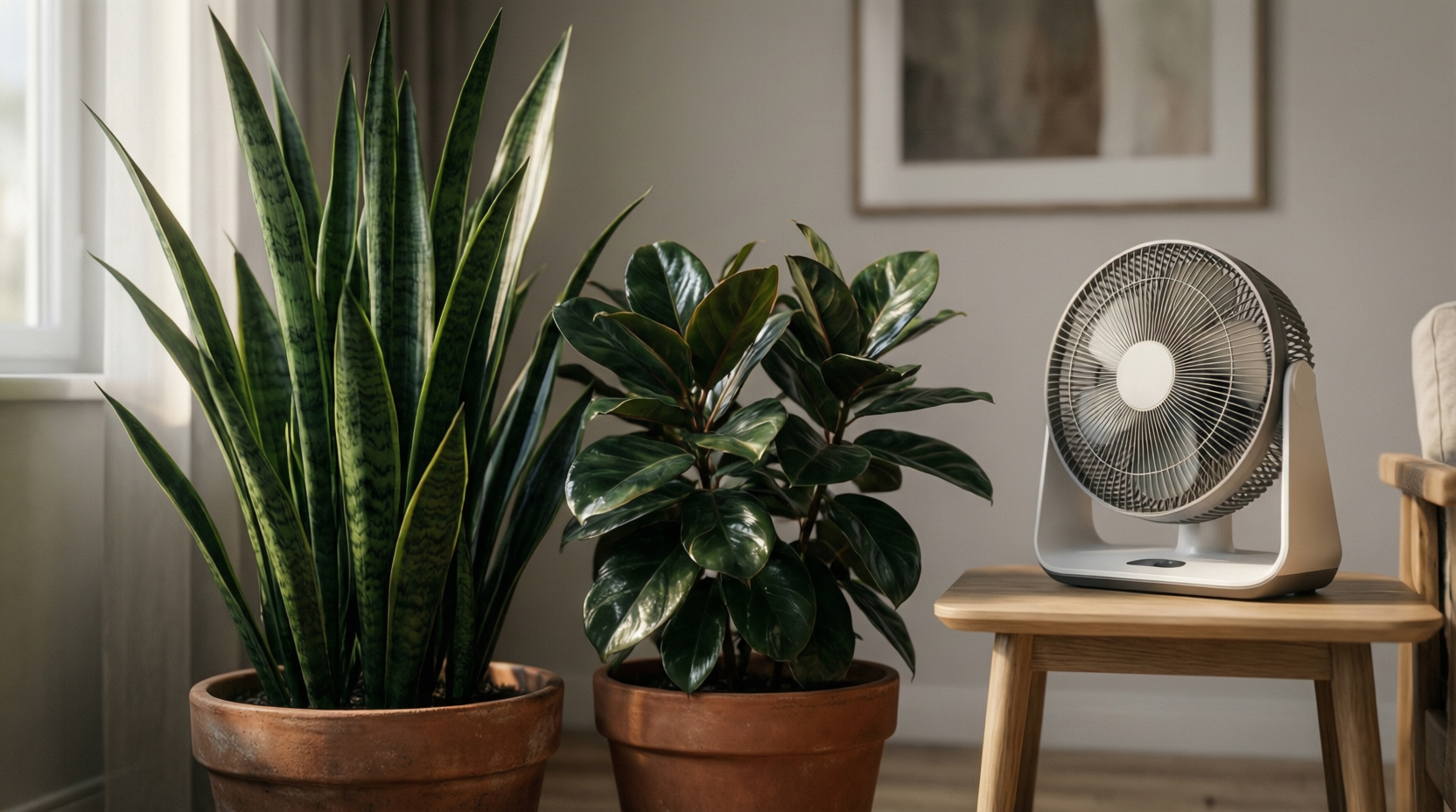
The undisputed king of difficult environments. The Snake Plant is practically indestructible. Its thick, waxy leaves store water efficiently, meaning it doesn’t rely heavily on rapid transpiration. It is also famous for its air-purifying qualities. Because it converts CO2 into oxygen at night, it is perfect for bedrooms where doors are often kept closed, reducing airflow further.
2. The ZZ Plant (Zamioculcas zamiifolia)
The ZZ plant is evolved for drought, growing from thick rhizomes that look like potatoes under the soil. These rhizomes store water, allowing you to neglect the plant for weeks. In low-ventilation rooms, the soil dries very slowly, which kills most plants. The ZZ plant, however, is happy to sit in dry soil for a long time, making it compatible with the slow drying cycle of a stuffy room.
3. The Cast Iron Plant (Aspidistra elatior)
True to its name, this plant is tough. It was a favorite in the Victorian era specifically because it could survive in dark, sooty, stuffy parlors with no electricity or open windows. It grows slowly and isn’t fussy about humidity levels, making it less prone to the fungal issues that plague faster-growing tropicals.
4. Pothos (Epipremnum aureum)
While Pothos enjoys humidity, it is incredibly adaptable. The key to keeping Pothos in a low-airflow room is to trail it rather than bunch it. If you let the vines hang down or climb a wall, air can reach every leaf. If you coil it tightly in the pot, the center will rot due to lack of circulation.
5. Spider Plant (Chlorophytum comosum)
Spider plants are tough and fast-growing. They are particularly good at scrubbing pollutants from the air, which is a significant benefit in apartments where the air isn’t recycled often. Just be careful to trim away any brown tips to prevent decay.
The Golden Rule: Adjusting Your Watering Technique
If you take only one piece of advice from this article, let it be this: You must water less.
In a well-ventilated house, a plant might need water every 7 days. In an apartment with poor ventilation, that same plant might only need water every 14 to 20 days. Because the air isn’t carrying moisture away from the soil surface or the leaves, the water sits there.
The “Chopstick Method”
Do not rely on a moisture meter alone. Use a wooden chopstick. Push it all the way to the bottom of the pot.
- If it comes out with damp soil clinging to it: Do not water.
- If it comes out dry and clean: It is time to water.
Bottom Watering
This is a game-changer for stuffy apartments. Instead of pouring water on top (which keeps the topsoil wet and invites fungus gnats and mold), place your pot in a bowl of water for 15 minutes. The roots will drink what they need from the drainage holes. This keeps the top layer of soil dry, which is essential for preventing mold in low-airflow rooms.
Artificial Ventilation: Creating Your Own Breeze
If you cannot open a window because of noise, pollution, or building design, you must create artificial weather.
The Oscillating Fan Trick
You do not need a wind tunnel. A small, silent oscillating fan placed in the corner of the room, set to the lowest setting, is enough. You don’t want the fan blowing directly onto the plants (which can dry them out too fast), but rather blowing past them. This gentle air movement disrupts the boundary layer of humidity on the leaves and discourages fungal spores from landing.
Strategic Spacing
In the era of Instagram, the “clustered” plant look is popular. In a low-ventilation apartment, this is dangerous. When plants are touching, they create a dense canopy that traps moisture.
Space your pots at least 4 to 6 inches apart. This “social distancing” for plants ensures that whatever little air movement exists in your room can circulate around the entire pot.
Soil Secrets: Engineering Breathability
Since the air in your room is heavy, the air in your soil must be light. Standard potting mix is too dense for apartments with poor ventilation. It holds water like a sponge, leading to root rot.
For every plant you bring home, consider repotting it into a “chunky” mix. A great recipe for low-ventilation environments is:
- 50% High-quality potting soil
- 30% Perlite or Pumice (for aeration)
- 20% Orchid Bark (to create large air pockets)
This mixture ensures that even if the air in the room is stagnant, the roots are still getting oxygen. Oxygen at the root level is the primary defense against root rot.
Additionally, always choose Terracotta pots. Unlike plastic or glazed ceramic, terracotta is porous. It allows moisture to escape through the walls of the pot, essentially helping the soil to “breathe” from the sides, compensating for the lack of airflow from the top.
Hygiene and Mold Prevention
In environments with little air movement, dust settles and stays. A layer of dust on a leaf blocks sunlight and reduces the plant’s ability to photosynthesize.
Leaf Wiping Routine
Once a week, take a damp microfiber cloth and gently wipe the leaves of your plants. This removes dust and also physically removes any fungal spores that may have landed.
Dealing with Surface Mold
You might notice a white, fuzzy mold growing on top of your soil. While generally harmless to the plant, it indicates your environment is too stagnant.
- Scrape off the moldy top layer.
- Sprinkle Cinnamon powder on the soil surface. Cinnamon is a natural, powerful fungicide that inhibits mold growth without harming the plant.
Conclusion: Adaptation is Key
Gardening in an apartment with poor ventilation is not impossible; it just requires a shift in mindset. You are not just watering a plant; you are managing an ecosystem.
By choosing tough plants like Sansevieria and ZZ plants, using breathable terracotta pots, aerating your soil with perlite, and being strictly disciplined with your watering schedule, you can avoid the common pitfalls of root rot and disease.
Remember, plants want to live. If you provide them with the right foundation—specifically, airy soil to compensate for the still air—they will adapt to your apartment life. Don’t let a lack of windows stop you from cultivating your own sanctuary. With these adjustments, your indoor garden will not only survive; it will flourish.