
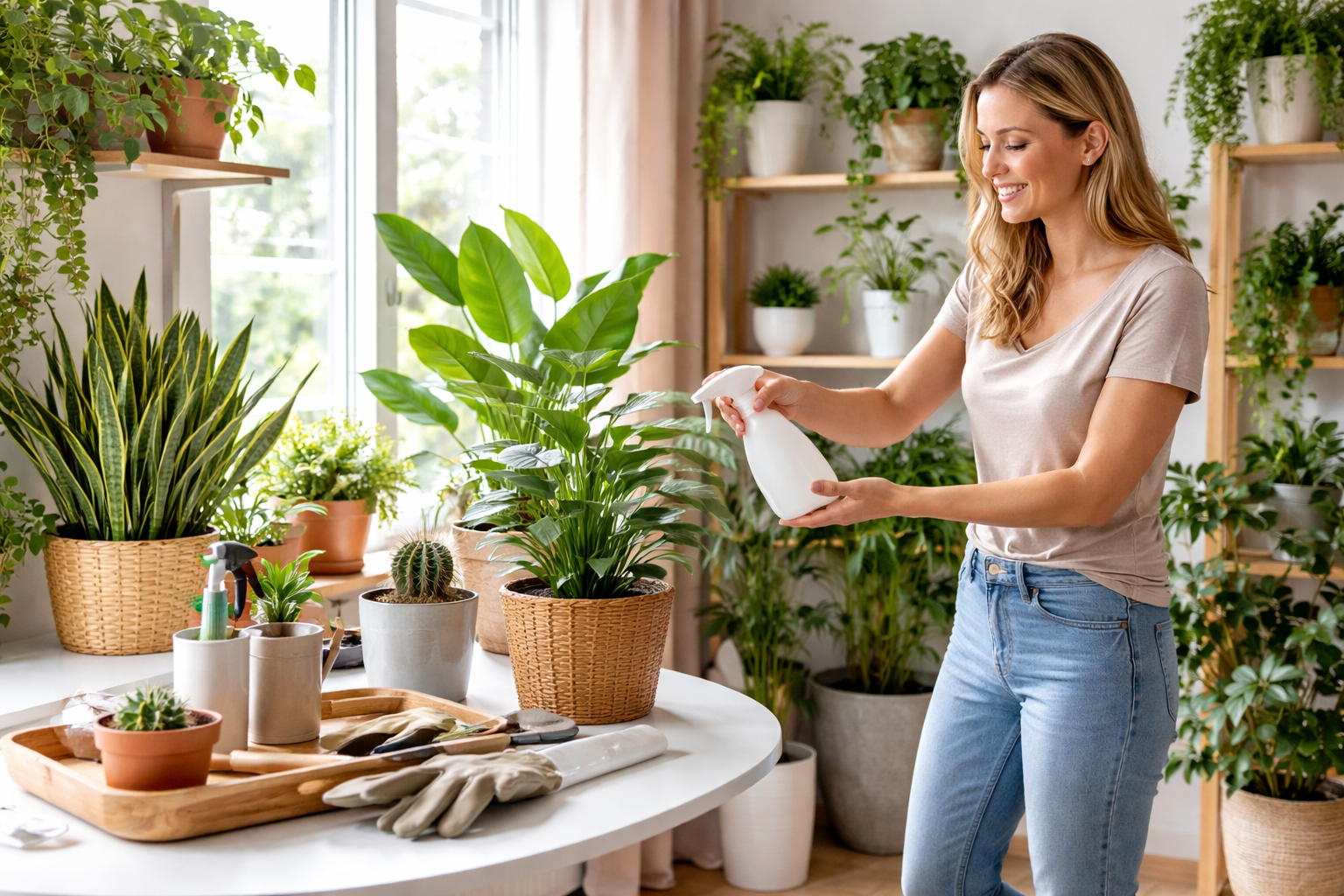
Caring for plants in an apartment does not need to be complicated or time-consuming. Many people give up on indoor plants because they believe plant care requires advanced knowledge or daily attention. In reality, most indoor plants thrive with a simple, consistent routine that fits easily into everyday life.
A well-structured care routine helps plants stay healthy, reduces common problems, and makes plant care enjoyable rather than stressful. This article presents a simple and practical routine for caring for plants in apartments, focusing on habits that anyone can follow, regardless of experience level.
Why a Simple Routine Works Best for Indoor Plants
Indoor plants live in controlled environments where light, temperature, and airflow change slowly. Because of this stability, plants respond better to consistent care rather than frequent adjustments.
A simple routine:
- Reduces mistakes
- Helps plants adapt
- Saves time and effort
Consistency is more important than doing too much.
Understanding the Needs of Apartment Plants
Most apartment plants share similar basic needs. They require adequate light, proper watering, clean leaves, and occasional maintenance.
Key needs include:
- Balanced light exposure
- Correct watering timing
- Clean and healthy growing conditions
Meeting these needs regularly prevents most plant problems.
Observing Your Plants Regularly
Observation is the foundation of plant care. Plants show signs when they are healthy or stressed.
Spend a few moments each week:
- Looking at leaf color
- Checking soil moisture
- Noticing growth patterns
This habit helps you respond early to any issues.
Choosing the Right Location from the Start
A good care routine begins with proper placement. When plants are placed in suitable spots, they require less intervention.
Choose locations that:
- Match the plant’s light needs
- Avoid strong drafts
- Maintain stable temperatures
Correct placement simplifies long-term care.
Establishing a Weekly Watering Check
Rather than watering on a strict schedule, check plants weekly to see if they need water.
A simple method:
- Touch the soil with your finger
- Water only if it feels dry at the appropriate depth
- Empty excess water from saucers
This prevents overwatering, one of the most common mistakes.
Adjusting Watering Based on the Season
Plants’ water needs change throughout the year.
General guidelines:
- Water less during colder months
- Increase watering during active growth periods
- Observe changes in drying speed
Seasonal adjustments keep plants balanced.
Keeping Leaves Clean and Healthy
Dust accumulation reduces a plant’s ability to absorb light.
A simple cleaning routine:
- Wipe leaves gently with a damp cloth
- Clean leaves every few weeks
- Avoid chemical cleaners
Clean leaves improve plant appearance and health.
Checking for Early Signs of Stress
Early detection prevents small issues from becoming serious problems.
Look for:
- Yellowing leaves
- Drooping stems
- Unusual spots
Addressing these signs early keeps plants resilient.
Providing Adequate Air Circulation
Good airflow helps prevent moisture-related issues.
To improve circulation:
- Avoid overcrowding plants
- Open windows occasionally
- Space plants apart
Airflow supports healthy growth and reduces stress.
Maintaining a Clean Plant Area
A tidy environment supports plant health.
Simple habits include:
- Removing dead leaves
- Cleaning around pots
- Keeping soil surfaces clear
Clean surroundings discourage pests and disease.
Rotating Plants for Balanced Growth
Plants naturally grow toward light sources.
Rotating plants:
- Promotes even growth
- Prevents leaning
- Improves overall shape
Turning pots slightly every few weeks is enough.
Using Pots with Proper Drainage
Drainage is essential for a simple care routine.
Always use pots that:
- Have drainage holes
- Allow excess water to escape
- Prevent water buildup
Proper drainage reduces root problems.
Understanding When to Repot
Plants do not need frequent repotting.
Signs repotting may be needed:
- Roots growing out of drainage holes
- Soil drying too quickly
- Reduced growth
Repotting restores space and nutrients.
Feeding Plants Without Overcomplicating
Indoor plants need nutrients, but too much fertilizer causes problems.
Simple feeding tips:
- Use diluted fertilizer
- Feed only during active growth
- Avoid fertilizing stressed plants
Moderation is key.
Creating a Monthly Maintenance Routine
Monthly tasks help maintain long-term health.
These may include:
- Inspecting roots
- Checking pot condition
- Refreshing topsoil
Monthly attention keeps plants stable.
Managing Light Changes Over Time
Light changes slightly with the seasons.
Monitor:
- Sunlight intensity
- Shadow movement
- Plant response
Adjust placement gently if needed.
Avoiding Frequent Plant Relocation
Plants adapt slowly to new environments.
Avoid:
- Moving plants often
- Changing locations unnecessarily
- Constant experimentation
Stability supports strong growth.
Keeping Expectations Realistic
Indoor plants grow at their own pace.
Healthy plants may:
- Grow slowly
- Produce fewer leaves in low light
- Change with seasons
Patience improves satisfaction.
Using Simple Tools to Support Your Routine
Tools can help simplify care.
Useful tools include:
- Moisture meters
- Watering cans with narrow spouts
- Soft cloths for cleaning leaves
Tools support, but observation remains essential.
Preventing Problems Before They Start
Prevention is easier than correction.
Preventive habits:
- Regular checks
- Proper spacing
- Balanced watering
These habits reduce the need for intervention.
Building Confidence Through Consistency
Confidence comes from repetition and success.
With a routine:
- Care becomes intuitive
- Plants thrive
- Stress decreases
Small habits create big results.
Adapting the Routine to Your Lifestyle
A good routine fits your schedule.
Choose habits that:
- Are easy to remember
- Require minimal time
- Feel natural
Sustainable routines last longer.
Teaching Yourself to Read Plant Signals
Plants communicate through subtle changes.
Learning these signals:
- Improves care accuracy
- Reduces mistakes
- Builds experience
Observation improves over time.
Avoiding Common Care Mistakes
Common mistakes include:
- Overwatering
- Ignoring light needs
- Overcrowding plants
Awareness prevents these issues.
Creating a Calm and Enjoyable Plant Routine
Plant care should be relaxing, not stressful.
A simple routine:
- Encourages consistency
- Supports healthy growth
- Makes plants enjoyable
Simplicity leads to success.
Making Plant Care a Natural Part of Your Home
Plants thrive when they are integrated into your daily environment. A simple care routine helps you notice changes, respond calmly, and enjoy the presence of plants in your apartment.
With consistent habits, basic observation, and patience, caring for apartment plants becomes effortless. Over time, your plants will reward you with healthy growth, beauty, and a more welcoming living space.