
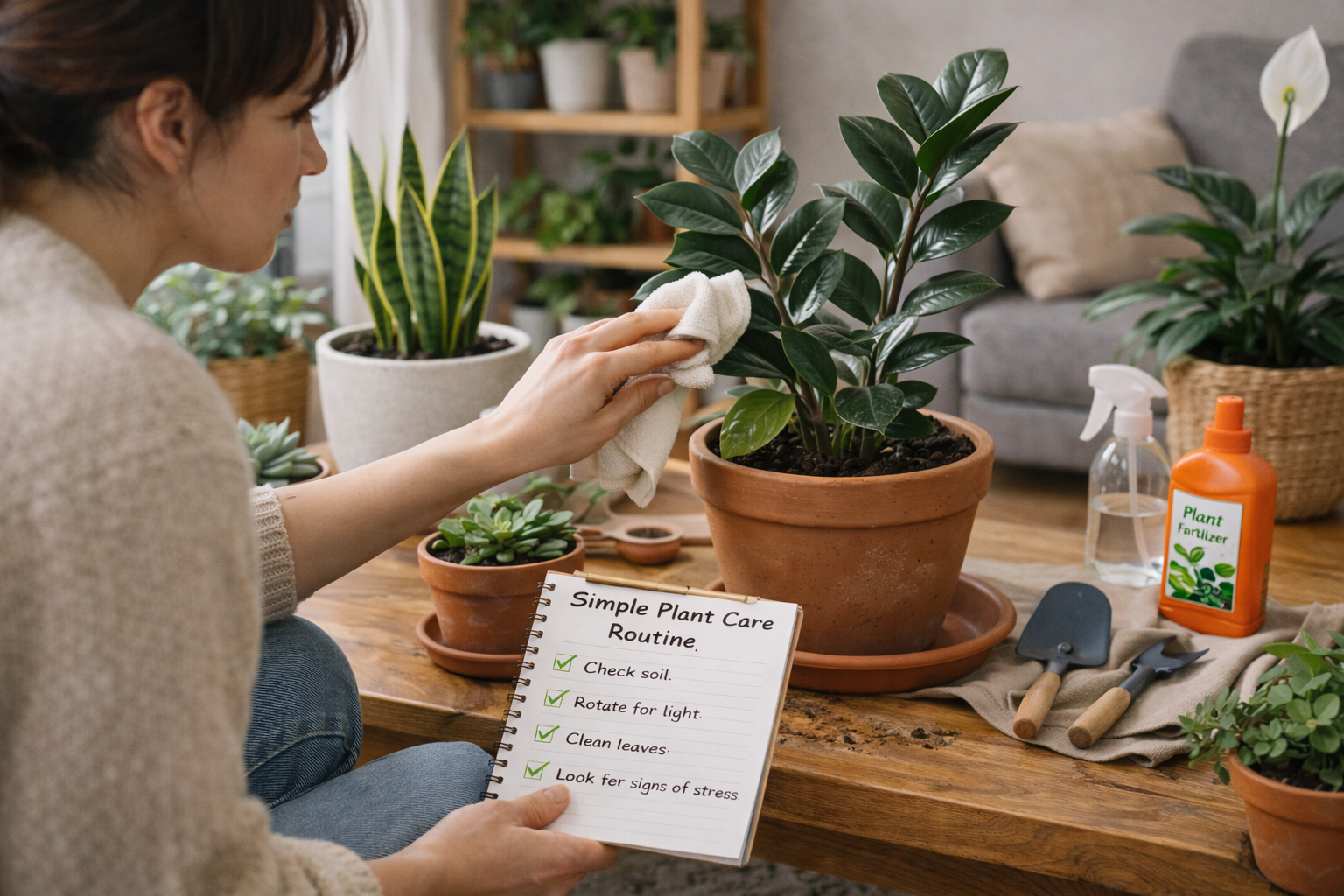
Keeping indoor plants healthy is not about complicated techniques or expensive products. Most thriving houseplants are the result of simple, consistent habits that respect how plants naturally grow. When you understand what plants need and how indoor environments affect them, plant care becomes much easier and far more enjoyable.
This article provides practical, easy-to-follow tips that help indoor plants stay healthy, balanced, and visually appealing over time. Whether you’re a beginner or already have experience, these strategies will help you avoid common problems and build a sustainable indoor plant routine.
Understanding the Basics of Indoor Plant Health
Indoor plants depend entirely on you. Unlike outdoor plants, they don’t receive natural rainfall, wind, or changing light conditions. This means small mistakes can have a bigger impact indoors.
Healthy indoor plants usually share a few common traits:
- Steady growth
- Firm, green leaves
- No strong odors from the soil
- Balanced moisture levels
When these basics are in place, most plants adapt well and grow steadily.
Providing the Right Amount of Light
Light is the foundation of plant health. Without adequate light, plants cannot produce energy, no matter how well they are watered or fertilized.
To keep plants healthy indoors:
- Place plants near windows with indirect light
- Avoid harsh direct sunlight unless the plant requires it
- Rotate plants every few weeks to ensure even exposure
Observing how light changes throughout the day helps you position plants correctly.
Watering Correctly Without Overdoing It
Watering is one of the most misunderstood aspects of indoor plant care. Too much water is far more damaging than too little.
Practical watering tips:
- Always check the soil before watering
- Water only when the top layer feels dry
- Water slowly and evenly
Allowing excess water to drain prevents root damage and keeps the soil breathable.
Choosing Pots That Support Plant Health
Pots play a major role in plant health. Even a well-watered plant can suffer if the pot traps excess moisture.
Healthy pot choices include:
- Pots with drainage holes
- Pots sized appropriately for the plant
- Materials that allow airflow, such as clay or ceramic
Avoid oversized pots, as they hold excess moisture longer than plants need.
Using Quality Soil for Indoor Plants
Soil is more than just something that holds a plant upright. It provides oxygen, nutrients, and water balance.
Good indoor plant soil should:
- Drain well
- Retain moisture without becoming soggy
- Feel light and airy
Using the right soil mix helps roots grow strong and reduces the risk of disease.
Establishing a Simple Care Routine
Consistency is key when caring for indoor plants. A simple routine prevents neglect and overcare.
A practical routine may include:
- Weekly soil moisture checks
- Monthly inspection of leaves
- Occasional cleaning of dust from foliage
This approach keeps plants healthy without becoming overwhelming.
Keeping Leaves Clean and Functional
Dust builds up on indoor plant leaves faster than many people realize. This reduces the plant’s ability to absorb light.
To keep leaves healthy:
- Wipe them gently with a damp cloth
- Avoid leaf-shine products
- Clean leaves every few weeks
Clean leaves improve photosynthesis and overall appearance.
Managing Indoor Temperature and Airflow
Indoor environments often have artificial heating and cooling, which affects plant health.
To maintain balance:
- Keep plants away from air conditioners and heaters
- Avoid placing plants near drafts
- Allow gentle airflow in the room
Stable temperatures help plants grow consistently.
Understanding When and How to Fertilize
Fertilizer supports growth, but overuse can damage plants.
Healthy fertilizing habits include:
- Fertilizing only during active growth periods
- Using diluted fertilizer
- Avoiding fertilization when plants are stressed
Less frequent, gentle feeding is usually more effective indoors.
Recognizing Early Signs of Stress
Plants communicate through visual cues. Learning to read these signs helps prevent bigger problems.
Common signs include:
- Yellowing leaves
- Drooping or curling
- Brown edges
Addressing issues early keeps plants from declining further.
Giving Plants Space to Breathe
Crowding plants together may look appealing, but it can restrict airflow and light.
Healthy spacing allows:
- Better air circulation
- Even light distribution
- Reduced pest risk
Each plant should have room to grow naturally.
Avoiding Frequent Relocation
Plants need time to adjust to their environment. Constantly moving them causes stress.
Best practice:
- Choose a suitable location early
- Let plants settle for several weeks
- Move plants only when necessary
Stability supports long-term health.
Adapting Care to Seasonal Changes
Indoor plants still respond to seasonal shifts in light and temperature.
During darker months:
- Reduce watering frequency
- Avoid fertilizing heavily
During brighter months:
- Increase light exposure
- Resume gentle feeding
Adjusting care keeps plants balanced year-round.
Monitoring Soil and Root Health
Healthy roots are essential for healthy plants. Problems often start below the surface.
Warning signs include:
- Sour-smelling soil
- Persistent moisture
- Slow growth
Checking soil condition helps you act before serious damage occurs.
Building Healthy Habits Over Time
Plant care improves with observation and patience. There’s no need for perfection.
Focus on:
- Learning from each plant
- Making small adjustments
- Staying consistent
Healthy habits create healthy plants.
Creating a Calm and Supportive Environment
Plants thrive in calm, stable environments. Avoid extremes and sudden changes whenever possible.
A supportive environment includes:
- Balanced light
- Moderate watering
- Clean surroundings
This creates ideal conditions for long-term growth.
Enjoying the Process of Plant Care
Caring for plants should feel rewarding, not stressful. Over time, small routines become second nature.
When plants thrive:
- Confidence grows
- Care becomes intuitive
- The indoor space feels more alive
Healthy plants enhance comfort and well-being.
Long-Term Success with Indoor Plants
Keeping indoor plants healthy is about understanding, patience, and consistency. When plants receive what they need, they reward you with beauty and vitality.
With practical habits and mindful care, indoor plants can remain healthy for years, turning any living space into a welcoming and balanced environment.