
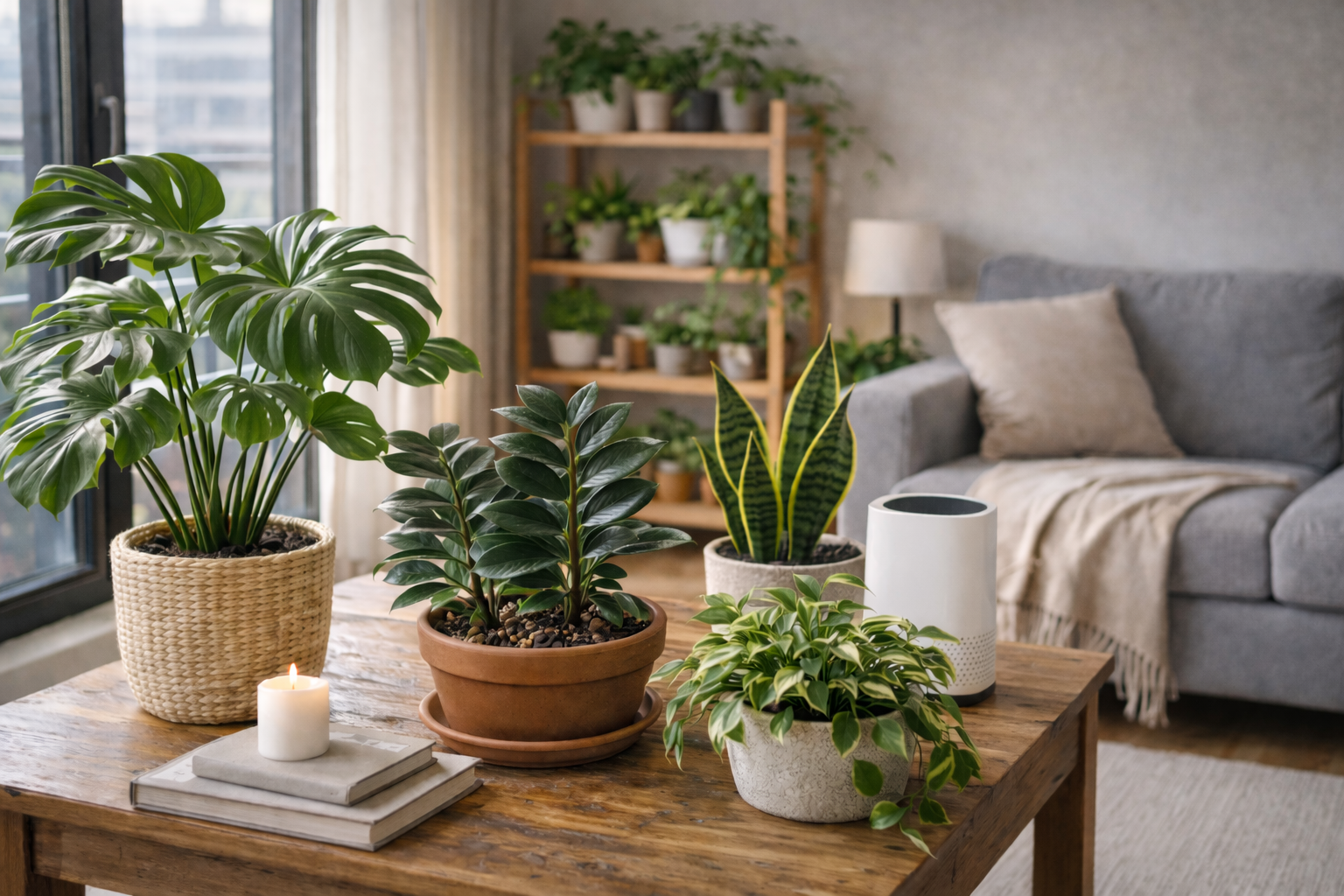
Modern apartment living offers convenience and style, but it often comes with a hidden cost: a disconnection from the natural world. Many of us live in spaces defined by drywall, synthetic carpets, and sealed windows. Over time, this environment can feel sterile, dry, or even stifling.
However, the solution isn’t necessarily a renovation or a move to the countryside. It is biology. Introducing the right plants into your apartment does far more than just add a splash of green to your decor. Plants are functional, living organisms that actively interact with their surroundings.
They act as natural air purifiers, acoustic buffers, humidity regulators, and stress relievers. Transforming your apartment starts with understanding which botanical allies to choose. This guide explores the specific plants that can fundamentally improve the physical and mental quality of your living space.
The Science of Biophilia: Why We Need Greenery
Before diving into specific species, it is important to understand why plants make us feel better. The concept is called “Biophilia,” a term popularized by biologist E.O. Wilson. It suggests that humans possess an innate tendency to seek connections with nature.
In an apartment setting, this connection is often severed. Studies have shown that the simple presence of indoor plants can lower cortisol levels (the stress hormone), lower blood pressure, and improve concentration.
When we talk about “improving the environment,” we are addressing three distinct layers:
- Air Quality: Removing toxins and increasing oxygen.
- Physical Comfort: Regulating humidity and reducing noise.
- Psychological Atmosphere: Creating a sense of calm and refuge.
The Air Purifiers: Filtering Invisible Toxins
Apartments, especially in newer buildings or renovated units, can suffer from “Sick Building Syndrome.” This is caused by Volatile Organic Compounds (VOCs) like formaldehyde, benzene, and trichloroethylene. These invisible chemicals off-gas from paint, furniture glue, carpets, and cleaning products.
While no single plant can replace a HEPA filter, NASA’s famous Clean Air Study proved that certain plants are effective at absorbing these toxins through their leaves and roots.
1. The Snake Plant (Sansevieria trifasciata)
If you only buy one plant for your apartment, make it this one. The Snake Plant is an architectural beauty with sword-like leaves that grow vertically, making it perfect for tight corners.
- The Benefit: Most plants release oxygen during the day. The Snake Plant acts differently. It performs a type of photosynthesis called Crassulacean Acid Metabolism (CAM), allowing it to release oxygen at night.
- Placement: This makes it the ultimate bedroom companion for better sleep air quality.
- Care: It thrives on neglect. Water it only when the soil is bone dry.
2. The Spider Plant (Chlorophytum comosum)
This is a classic for a reason. With its arching, striped leaves, it adds softness to rigid apartment lines.
- The Benefit: It is a powerhouse against carbon monoxide and formaldehyde. It is also non-toxic to pets (cats and dogs), which is a crucial environmental factor for many pet owners.
- Placement: Hang it in a basket near a window or place it on a high shelf where its “babies” (spiderettes) can dangle.
3. The Peace Lily (Spathiphyllum)
For those who want flowers without the fuss, the Peace Lily offers elegant white blooms.
- The Benefit: It excels at removing ammonia, which is often found in household cleaning products, as well as benzene and acetone. It is also known to break down mold spores in the air.
- Placement: Bathrooms or laundry rooms are ideal, as long as there is a window.
- Care: This plant is dramatic. It will droop sadly when thirsty, signaling exactly when to water it.
The Humidity Regulators: Combating Dry Air
One of the biggest complaints in apartment living is dry air. In winter, radiators sap the moisture; in summer, air conditioning does the same. Dry air creates dust, irritates sinuses, and dries out skin.
Plants release moisture through a process called transpiration. Essentially, they sweat water vapor through pores in their leaves, acting as natural, electricity-free humidifiers.
4. The Boston Fern (Nephrolepis exaltata)
This lush, feathery plant is a transpiration machine. Because it requires moist soil to survive, it is constantly cycling water from its pot into the air.
- The Benefit: A large Boston Fern can release a significant amount of moisture daily, helping to soothe dry throats and skin.
- Placement: It craves indirect light and humidity. A bathroom with a window is perfect, or a living room corner away from direct sun.
- Care: Never let it dry out. Mist it frequently.
5. The Areca Palm (Dypsis lutescens)
If you have space for a floor plant, the Areca Palm brings a tropical vibe and serious moisture.
- The Benefit: Known as one of the best humidifying plants, it creates a microclimate around itself. It softens the “hard” feeling of a room.
- Placement: It needs bright, indirect light. A spot near a south or west-facing window is ideal.
The Acoustic Buffers: Reducing Urban Noise
Apartment walls are often thin. You might hear traffic outside or neighbors next door. While plants won’t soundproof a room like professional foam, they can refract and absorb sound, reducing echoes and the harshness of noise.
The key to sound absorption is surface area. You need plants with large, broad leaves or complex, dense foliage.
6. The Rubber Plant (Ficus elastica)
This plant features thick, glossy, leathery leaves that are surprisingly effective at absorbing sound vibrations.
- The Benefit: The dense biomass of the leaves breaks up sound waves rather than bouncing them off the wall. It also looks incredibly chic and modern.
- Placement: Place it near the source of the noise (like a window facing a street) or in corners where sound tends to echo.
- Care: Wipe the leaves regularly so they can breathe.
7. The Weeping Fig (Ficus benjamina)
This is a tree-like plant with thousands of small leaves.
- The Benefit: The complex structure of the branches and leaves helps to diffuse noise, reducing the “hollow” sound of an empty or large room.
- Care: It hates being moved. Find a spot for it and leave it there, or it may drop its leaves in protest.
The Stress Busters: Improving Mental Flow
Sometimes, improving the environment is about changing the “vibe.” Visual chaos or sterile minimalism can both induce stress. Plants provide a resting place for the eyes.
8. The Pothos (Epipremnum aureum)
This trailing vine is virtually indestructible and grows rapidly.
- The Benefit: The Pothos provides immediate visual gratification. Its cascading vines soften sharp edges of bookshelves and cabinets. The bright green color is scientifically proven to reduce eye strain for people working on computers.
- Placement: High shelves, hanging baskets, or trained to climb up a wall.
9. Lavender (Lavandula)
While usually an outdoor plant, smaller varieties can be grown on a sunny windowsill.
- The Benefit: Scent is a powerful component of an environment. The fragrance of lavender significantly decreases heart rate and lowers blood pressure.
- Care: It needs intense light. Only attempt this if you have a sunny, south-facing window.
Low-Maintenance Options for Busy Lives
A dying plant does not improve the environment; it adds to your stress and clutter. If you travel often or work long hours, you need plants that improve the room without demanding energy.
10. The ZZ Plant (Zamioculcas zamiifolia)
This plant has waxy, emerald-green leaves that reflect light, brightening up dark rooms.
- The Benefit: It is the ultimate survivor. It tolerates low light, drought, and dry air. It quietly cleans the air (specifically removing xylene and toluene) while asking for nothing in return.
- Care: Water it once a month. Seriously.
How to Style for Maximum Impact
To truly improve the apartment environment, don’t just place one pot in a corner. Strategy matters.
- Cluster Your Plants: Grouping plants together creates a “green zone.” This increases the local humidity for the plants and creates a stronger visual focal point for you.
- Vary the Heights: Use plant stands, hanging planters, and floor pots. This draws the eye up and down, making small apartments feel larger and more dynamic.
- Consider the Pot: The pot is part of the decor. Porous materials like terracotta allow the soil to breathe (good for succulents), while glazed ceramic holds moisture (good for tropicals). Choose colors that complement your interior design to reduce visual clutter.
Conclusion
Your apartment is your sanctuary. It is where you recharge after facing the noise and concrete of the city. By strategically introducing plants, you are not just decorating; you are engineering a healthier ecosystem.
Whether you choose a Snake Plant to purify your bedroom air, a Boston Fern to combat the winter dryness, or a Rubber Tree to dampen the street noise, you are taking an active step toward better living.
Start small. Choose one or two plants from this list that fit your lighting conditions. Within weeks, you will notice a shift. The air will feel fresher, the room will sound softer, and the space will feel more alive. In the concrete jungle of apartment living, a little bit of nature is not just a luxury—it is a necessity.