
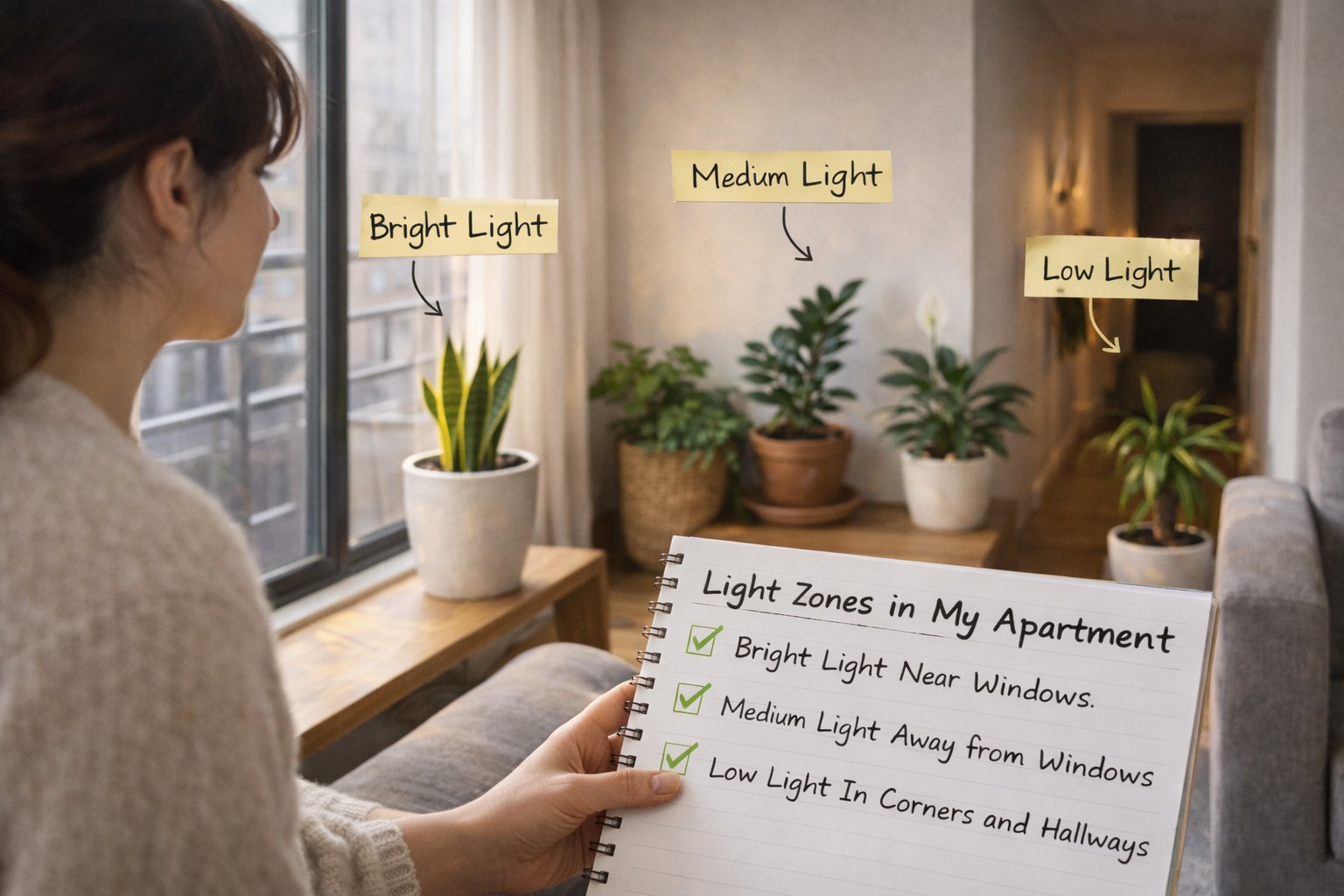
Living in an apartment with limited natural light is very common, especially in urban areas. Many people believe that without bright sunlight, keeping plants indoors is impossible. Fortunately, this is not true. Several plants have adapted to grow naturally in shaded environments and can thrive even in apartments with small windows or indirect lighting.
Understanding which plants grow well with little natural light helps you avoid frustration, reduce maintenance problems, and enjoy greenery even in less sunny spaces. This article explores how low-light conditions work, which plants adapt best, and how to care for them successfully over time.
What Low Light Really Means Indoors
Low light does not mean complete darkness. Even rooms without direct sunlight usually receive some level of ambient daylight reflected from windows, walls, or nearby rooms.
Low-light environments typically include:
- Rooms with small or shaded windows
- Apartments facing other buildings
- Hallways or corners away from windows
- Bathrooms with frosted or narrow windows
Plants that tolerate low light evolved to grow under tree canopies, where sunlight is filtered and soft.
Why Some Plants Thrive with Little Light
Plants that grow well in low light usually have slower growth and efficient energy use. They are adapted to absorb and use limited light without stress.
These plants often:
- Grow slowly and steadily
- Have dark green leaves to capture light
- Require less frequent watering
Because they grow slowly, they are often easier to maintain indoors.
Understanding Expectations with Low-Light Plants
Low-light plants survive and remain healthy, but they usually do not grow as fast or as large as plants in brighter environments.
This means:
- Growth will be slower
- New leaves may appear less frequently
- Maintenance is usually simpler
Understanding this helps prevent unrealistic expectations.
Snake Plant: One of the Best Low-Light Options
The snake plant is one of the most reliable plants for low-light apartments. It tolerates a wide range of conditions and requires minimal care.
Why it performs well:
- Thrives in low to medium light
- Requires infrequent watering
- Grows upright, saving space
It’s ideal for bedrooms, hallways, and living rooms with limited light.
ZZ Plant: Extremely Adaptable to Low Light
The ZZ plant is known for its ability to survive in very low-light conditions. It stores water in its roots, making it highly resilient.
Key benefits:
- Handles low light exceptionally well
- Requires minimal watering
- Maintains a clean, structured appearance
It’s perfect for offices, corners, and apartments with few windows.
Pothos: Flexible and Forgiving
Pothos is a popular indoor plant that adapts to various light levels, including low light. While it grows faster in brighter conditions, it remains healthy in shaded spaces.
Why pothos works well:
- Adapts easily to different environments
- Can grow in hanging pots or shelves
- Easy to prune and maintain
Its trailing vines add warmth to low-light rooms.
Cast Iron Plant: Built for Shade
The cast iron plant lives up to its name. It is one of the toughest indoor plants and thrives in shade.
Advantages include:
- Excellent tolerance to low light
- Slow, controlled growth
- Minimal maintenance needs
It’s a great choice for entryways and darker rooms.
Peace Lily in Low-Light Conditions
Peace lilies are often associated with brighter rooms, but they can adapt well to low-light environments with proper care.
Important considerations:
- Growth may slow in low light
- Flowers may appear less frequently
- Leaves remain healthy with consistent care
They are suitable for bedrooms and shaded living areas.
Chinese Evergreen: Designed for Indoor Shade
Chinese evergreen plants are well-known for their ability to tolerate low light and indoor conditions.
Why they are ideal:
- Adapt well to low and medium light
- Come in various leaf patterns
- Maintain compact growth
They add visual interest without demanding strong light.
Choosing the Right Spot for Low-Light Plants
Even low-light plants need some light. Placement still matters.
Good locations include:
- Near north-facing windows
- A few feet away from brighter rooms
- Areas with consistent ambient light
Avoid placing plants in complete darkness.
Watering Adjustments for Low-Light Conditions
Plants in low light use water more slowly. Overwatering is a common mistake in shaded spaces.
Watering tips:
- Allow soil to dry more between waterings
- Check moisture carefully
- Reduce watering frequency
Less light means slower evaporation.
Pot and Soil Considerations in Low Light
Proper drainage becomes even more important in low-light environments.
Best practices include:
- Pots with drainage holes
- Well-draining soil
- Avoiding oversized containers
These prevent water from sitting too long in the soil.
Recognizing Healthy Growth in Low-Light Plants
Healthy low-light plants may grow slowly, but they still show signs of stability.
Positive signs include:
- Firm, upright leaves
- Consistent leaf color
- No foul smell from soil
Slow growth does not mean poor health.
Signs That Light Is Too Low
Even low-light plants have limits.
Warning signs include:
- Extremely slow or no growth
- Pale or yellowing leaves
- Weak, leaning stems
If this happens, move the plant slightly closer to a light source.
Artificial Light as a Helpful Supplement
Artificial light can support low-light plants when natural light is insufficient.
Artificial light works best when:
- Used consistently
- Placed close to the plant
- Combined with natural ambient light
It should enhance, not completely replace, daylight.
Cleaning Leaves in Low-Light Environments
Dust buildup reduces light absorption, which is especially problematic in low-light spaces.
To prevent this:
- Wipe leaves gently with a damp cloth
- Clean leaves every few weeks
- Avoid harsh cleaning products
Clean leaves help maximize available light.
Avoiding Overcrowding in Shaded Areas
Crowding plants together in low-light areas reduces airflow and increases moisture retention.
Healthy spacing:
- Improves airflow
- Reduces pest risk
- Helps each plant access light
Spacing is key for long-term health.
Seasonal Changes Still Matter
Even in low-light apartments, seasonal changes affect plant behavior.
During winter:
- Light is weaker
- Watering should be reduced
During summer:
- Slight increases in growth may occur
Adjust care accordingly.
Patience Is Essential with Low-Light Plants
Low-light plants reward patience. They grow steadily and maintain their form over time.
Avoid:
- Overwatering
- Frequent relocation
- Excess fertilization
Consistency is more effective than intervention.
Building Confidence with Shade-Tolerant Plants
Low-light plants are excellent for beginners because they forgive small mistakes.
As you gain experience:
- Care becomes intuitive
- Observation improves
- Confidence increases
They are a great foundation for indoor plant care.
Creating Green Spaces in Shaded Apartments
Even apartments with limited sunlight can feel warm and inviting with the right plants. By choosing species adapted to low light and providing consistent care, you can enjoy greenery in any space.
Low-light plants prove that sunlight limitations don’t have to limit your connection with nature.
✅ Próximo passo
Quando quiser, sigo automaticamente para o próximo artigo da lista, mantendo exatamente este padrão de qualidade e profundidade 🌿