
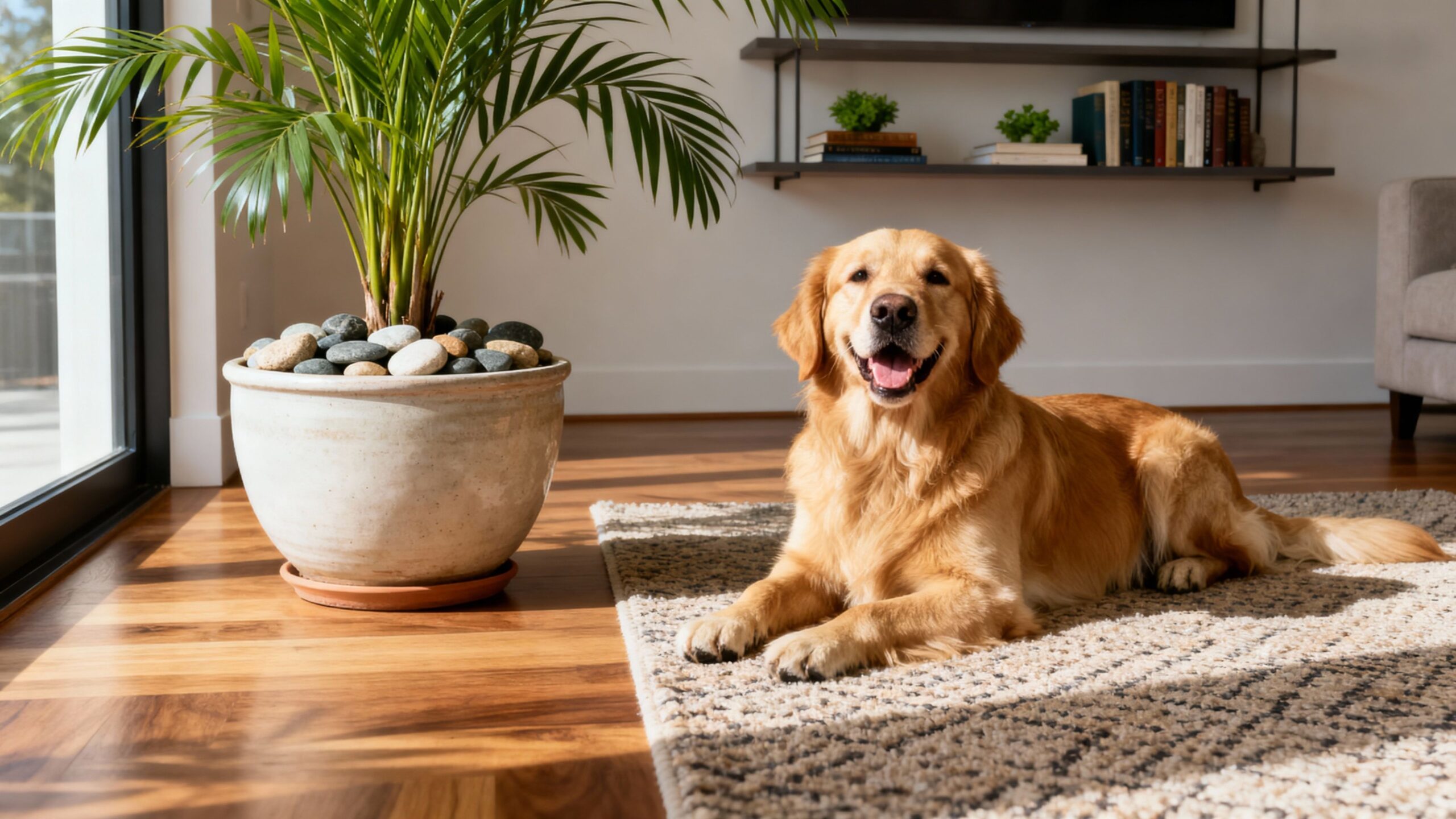
Living in an apartment often creates a deep craving for nature. You want to bring the outdoors in, transforming your compact living space into a lush, green sanctuary. However, if you share that apartment with a dog or a cat, your “urban jungle” dream can quickly turn into a nightmare of toppled pots, chewed leaves, and emergency trips to the vet.
For pet owners, the struggle is real. Cats love to climb shelves and bat at dangling vines, while dogs may view large floor pots as digging grounds or hydrants. Worse yet, many popular houseplants are highly toxic to animals.
The good news? You do not have to choose between your furry best friend and your botanical hobbies. With the right plant choices, strategic placement, and a bit of training, you can create a harmonious environment for everyone.
Here is your complete guide to thriving as a plant parent and a pet parent in an apartment setting.
Understanding the Instinct: Why Do Pets Attack Plants?
Before we dive into the solutions, it is important to understand the behavior. Your pet isn’t destroying your Monstera out of spite. In an apartment environment, pets—especially cats—can get bored.
Sensory Stimulation
Plants offer movement, texture, and smell. A swaying fern frond looks just like a feather toy to a cat. The crunch of a succulent leaf might feel satisfying to a teething puppy.
Dietary Needs
Sometimes, pets chew on greens because they are craving fiber or trying to settle an upset stomach. This is an ancestral instinct. If you don’t provide them with “their” greens, they will eat yours.
Territory and Height
For cats in small apartments, vertical space is crucial. If you place a plant on the only high shelf in the room, the cat isn’t trying to knock the plant over; they are just trying to sit on their throne, and the plant is in the way.
The Danger Zone: Common Toxic Plants to Avoid
If you are renting or living in a smaller space, you can’t always guarantee you will be there to supervise your pet 24/7. Therefore, the first rule of apartment gardening with pets is risk management.
Many “Instagram-famous” plants are toxic. If you already own these, you must place them completely out of reach or consider re-homing them.
1. The Lily Family (Lilium species)
This is non-negotiable for cat owners. True lilies are fatal to cats. Even ingesting the pollen (from grooming it off their fur) can cause kidney failure in less than 72 hours. Do not bring these into an apartment with a cat.
2. Sago Palm
A popular decorative palm, but every part of it is poisonous, especially the seeds. It causes liver failure in dogs and is often fatal.
3. Philodendrons and Pothos (Epipremnum aureum)
These are the most common apartment plants because they are low-light tolerant. However, they contain calcium oxalate crystals. While rarely fatal, chewing them causes intense burning in the mouth, drooling, and swelling of the throat.
4. Aloe Vera
Great for human skin, bad for pet stomachs. It contains saponins that cause vomiting, diarrhea, and lethargy.
Green Light: The Best Pet-Friendly Indoor Plants
Creating a safe haven means choosing plants that won’t hurt your pet if they take a nibble. Fortunately, many stunning plants are completely non-toxic.
The Spider Plant (Chlorophytum comosum)
This is the holy grail of pet-safe plants. It is resilient, grows fast, and produces “babies” you can propagate.
Note: Spider plants are mildly hallucinogenic to cats (similar to catnip). Your cat may obsess over it. It won’t hurt them, but they might destroy the plant, so hang it high.
The Calathea Family (Prayer Plants)
If you love patterned foliage, Calatheas are your best friend. They come in striking patterns of pink, white, and green. They are safe for both cats and dogs. They do require high humidity, which makes them perfect for apartment bathrooms.
Boston Fern (Nephrolepis exaltata)
Ferns add incredible texture and volume to a room. The Boston Fern is a classic, lush option that is non-toxic. They look fantastic in hanging baskets or on pedestals.
Areca Palm (Dypsis lutescens)
If you need a large statement plant for a corner of your living room, skip the Fiddle Leaf Fig (toxic) and go for an Areca Palm or a Parlor Palm. They provide that tropical canopy feel without the risk.
Peperomia Species
There are over 1,000 species of Peperomia, and they are generally safe. The Peperomia obtusifolia (Baby Rubber Plant) looks similar to a rubber tree but is compact and non-toxic.
Strategic Placement: Apartment Design for Safety
In an apartment, floor space is premium real estate. To keep plants safe, you often need to look up.
The “High Shelf” Strategy
Use floating shelves effectively. Place plants that trail (like Swedish Ivy or Spider Plants) on high shelves. Ensure the shelf is crowded enough that a cat cannot jump up and land on it, but not so crowded that plants fall off.
The Hanging Garden
Ceiling hooks and macramé hangers are your best friends. They keep plants completely out of reach of dogs and usually away from cats (unless you have a cat that swings from the chandeliers). This also saves valuable floor space in small apartments.
The IKEA Greenhouse Cabinet
This is a massive trend in interior design. Using glass cabinets (like the IKEA Milsbo or Fabrikör) allows you to keep high-humidity, potentially delicate, or even slightly toxic plants locked away. It acts as a barrier that still allows you to enjoy the aesthetic.
Terrariums
Enclosed glass terrariums are perfect for coffee tables. They protect small ferns and mosses from curious noses and paws.
The Decoy Method: If You Can’t Beat Them, Feed Them
One of the most effective psychological tricks for pets is providing them with their own garden.
If your cat constantly chews your Calathea, it means they want greens. Buy or grow Cat Grass (usually a mix of oat, rye, barley, and wheat).
Place the Cat Grass in an accessible spot on the floor. When your pet approaches your decorative plants, gently redirect them to their plant. Praise them when they chew the cat grass.
For dogs, having safe chew toys available near your plant area can distract them from the wooden stems of your indoor trees.
Protecting the Soil: The Digging Problem
Sometimes the plant isn’t the victim—the soil is. Cats may mistake large pots for litter boxes, and dogs may dig out of boredom.
The Stone Shield
Cover the top layer of your soil with large, heavy river rocks or decorative stones. They must be too heavy for a cat to flick aside and too large for a dog to swallow. This prevents digging and stops fungus gnats from laying eggs.
Citrus Peels
Most cats and dogs detest the smell of citrus. Placing lemon or orange peels on top of the soil can act as a natural deterrent.
Avoid Bone Meal
When fertilizing, avoid organic fertilizers that contain blood meal, fish emulsion, or bone meal. These smell like delicious treats to dogs and will encourage them to dig up the plant to find the “food.”
Emergency Protocols: What to Do If They Eat It
Even with the best preparation, accidents happen. You turn your back for two minutes, and your puppy has eaten a leaf.
1. Identify the Plant Immediately
You must know the scientific name of your plants. “That green leafy one” will not help the vet. Keep a list of your plants on your phone.
2. Watch for Symptoms
Common signs of poisoning include:
- Vomiting or diarrhea
- Excessive drooling
- Loss of appetite
- Lethargy or weakness
- Pale gums
- Twitching or seizures
3. Do Not Induce Vomiting
Unless explicitly told to do so by a professional, never induce vomiting. Some caustic plants can cause more damage coming back up than they did going down.
4. Call the Professionals
Have the number of your local vet and a 24-hour emergency animal hospital saved in your contacts.
Conclusion: A Harmonious Coexistence
Living in an apartment with pets and plants requires compromise. You might not be able to have that giant Monstera on the floor, and you might need to vacuum up spilled soil occasionally.
However, the mental health benefits of having greenery in your home, combined with the love of a pet, make the effort worthwhile.
Start small. Buy one Spider Plant. Hang it up. See how your pet reacts. With patience and smart choices, your apartment can be a thriving ecosystem where leaves grow green and tails wag freely.