
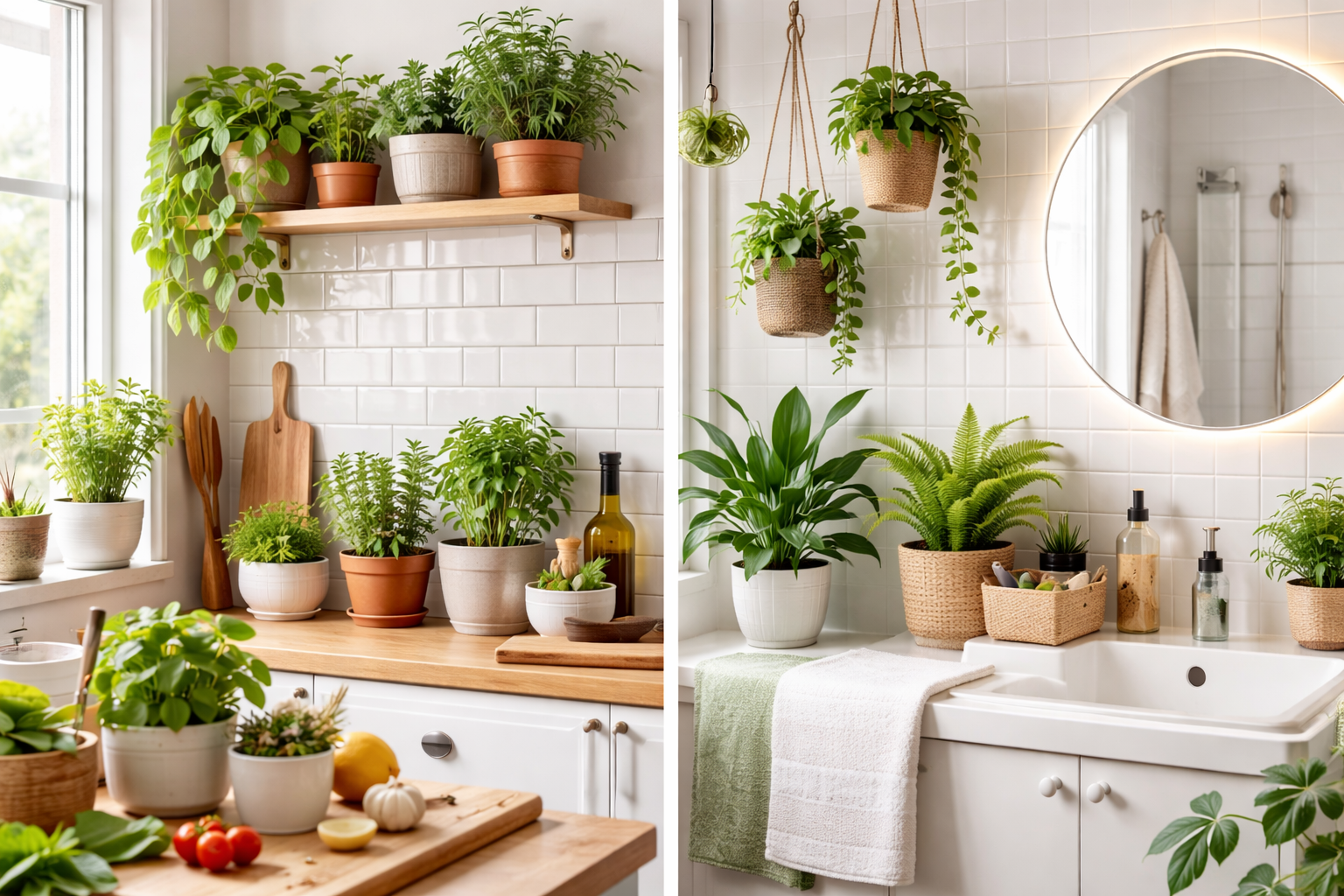
Adding plants to kitchens and bathrooms is one of the easiest ways to bring life, freshness, and comfort into an apartment. These spaces often have unique conditions such as humidity, temperature changes, and limited natural light, which means not all plants will thrive there. However, with the right choices, kitchens and bathrooms can become perfect environments for many beautiful and resilient plants.
In this article, you will discover which plants are ideal for apartment kitchens and bathrooms, why they adapt well to these spaces, and how to care for them properly. The content is designed to be practical, beginner-friendly, and aligned with best practices for healthy indoor gardening.
Why Kitchens and Bathrooms Are Special Environments for Plants
Kitchens and bathrooms differ from other rooms in an apartment because they usually have higher humidity levels and fluctuating temperatures. Steam from showers, cooking, and washing dishes creates a moist environment that many plants enjoy.
On the other hand, these rooms often have limited space and sometimes less natural light. Choosing plants that tolerate indirect light and humidity is essential for long-term success.
When the right plants are placed in these areas, they not only survive but often grow stronger and healthier.
Benefits of Having Plants in the Kitchen and Bathroom
Plants in kitchens and bathrooms offer more than decorative value. They help create a more pleasant and relaxing atmosphere, making daily routines more enjoyable.
In the kitchen, plants can add freshness, improve the look of countertops or shelves, and even provide herbs for cooking. In bathrooms, plants help soften the space, making it feel more like a personal retreat.
Plants also encourage better care habits and a closer connection with nature, even in small apartments.
Key Factors to Consider Before Choosing Plants
Before selecting plants for your kitchen or bathroom, consider a few important factors. Light availability is one of the most important aspects. Observe whether the room receives direct sunlight, indirect light, or mostly artificial light.
Humidity levels also matter. Bathrooms are usually more humid than kitchens, especially if there is a shower. Ventilation is another factor, as good airflow helps prevent mold and pests.
By understanding these conditions, you can choose plants that will adapt easily and require less maintenance.
Ideal Plants for Apartment Kitchens
Kitchens are great spaces for plants because they often receive some natural light and moderate humidity. The key is choosing plants that can handle occasional temperature changes.
Herbs are some of the most popular choices for kitchens. Basil, mint, rosemary, thyme, and parsley grow well in pots and are practical for cooking. They usually need bright, indirect light and regular watering.
Small leafy plants such as pothos and philodendron also do well in kitchens. They adapt easily to indoor conditions and don’t require constant attention.
Low-Maintenance Plants for Busy Kitchens
If you don’t spend much time caring for plants, low-maintenance options are ideal. Snake plants are a great choice for kitchens because they tolerate low light and irregular watering.
ZZ plants are another excellent option. They handle humidity and temperature changes well and can survive with minimal care.
These plants are perfect for shelves, corners, or areas that don’t receive direct sunlight.
Hanging and Vertical Plants for Kitchens
Kitchens often have limited counter space, making hanging or vertical plants a smart solution. Hanging plants save space while adding visual interest.
Pothos, trailing philodendrons, and spider plants work well in hanging planters. They thrive in indirect light and tolerate kitchen humidity.
Vertical planters near windows or walls can also be used to grow herbs without cluttering countertops.
Ideal Plants for Apartment Bathrooms
Bathrooms are often overlooked when it comes to plants, but they can be one of the best places for certain species. High humidity from showers creates a tropical-like environment.
Plants that naturally grow in humid conditions, such as ferns and calatheas, thrive in bathrooms. They enjoy moisture in the air and usually prefer indirect light.
Bathrooms with small windows or filtered light are especially suitable for these types of plants.
Best Plants for Low-Light Bathrooms
Many bathrooms don’t receive much natural light, but that doesn’t mean you can’t have plants there. Several plants adapt well to low-light conditions.
Snake plants and ZZ plants are excellent options for bathrooms with limited light. They are extremely resilient and can handle both humidity and shade.
Peace lilies also adapt well to low-light environments and add an elegant touch to bathroom spaces.
Plants That Thrive in High Humidity
Some plants truly love humidity and will grow better in bathrooms than in other rooms. Ferns, such as Boston ferns, are classic examples.
Calatheas and marantas are also well-suited for humid bathrooms. Their decorative leaves add color and texture to the space.
These plants benefit from the steam created during showers, reducing the need for frequent misting.
Safety and Placement Tips for Kitchens and Bathrooms
When placing plants in kitchens and bathrooms, safety should always be considered. Make sure plants are positioned away from direct heat sources like stoves or heaters.
In bathrooms, keep plants out of direct water streams to avoid damage. Shelves, window sills, and hanging planters are ideal spots.
Also, ensure pots have proper drainage to prevent water buildup and mold.
Easy Care Tips for Long-Term Success
Caring for plants in kitchens and bathrooms doesn’t need to be complicated. Regularly check soil moisture and adjust watering based on humidity levels.
Clean leaves occasionally to remove dust and help plants absorb light more efficiently. Good airflow helps prevent fungal issues, especially in bathrooms.
Observing your plants and responding to their needs is the best way to keep them healthy.
Combining Plants with Apartment Decor
Plants can easily blend with kitchen and bathroom decor. Neutral pots work well for modern spaces, while natural materials like wood or ceramic add warmth.
Small plants can be grouped together for visual impact, while larger plants can serve as focal points in corners or near windows.
Choosing plants that match your style helps create a cohesive and inviting space.
Making the Most of Small Apartment Spaces
Even in small apartments, kitchens and bathrooms can become green and vibrant with the right plant choices. You don’t need many plants to make a noticeable difference.
A few well-placed plants can completely change the atmosphere of these rooms, making them feel fresher and more welcoming.
Using vertical space, shelves, and hanging planters allows you to enjoy greenery without sacrificing functionality.
A Greener Apartment Starts in Unexpected Places
Kitchens and bathrooms are often underestimated when it comes to indoor plants, but they can be ideal environments for many species. With the right selections and simple care routines, these spaces can support healthy, beautiful plants year-round.
By choosing plants that adapt well to humidity, light conditions, and limited space, you create a more balanced and pleasant apartment. Small changes like adding plants to these rooms can make a big difference in how your home feels every day.