
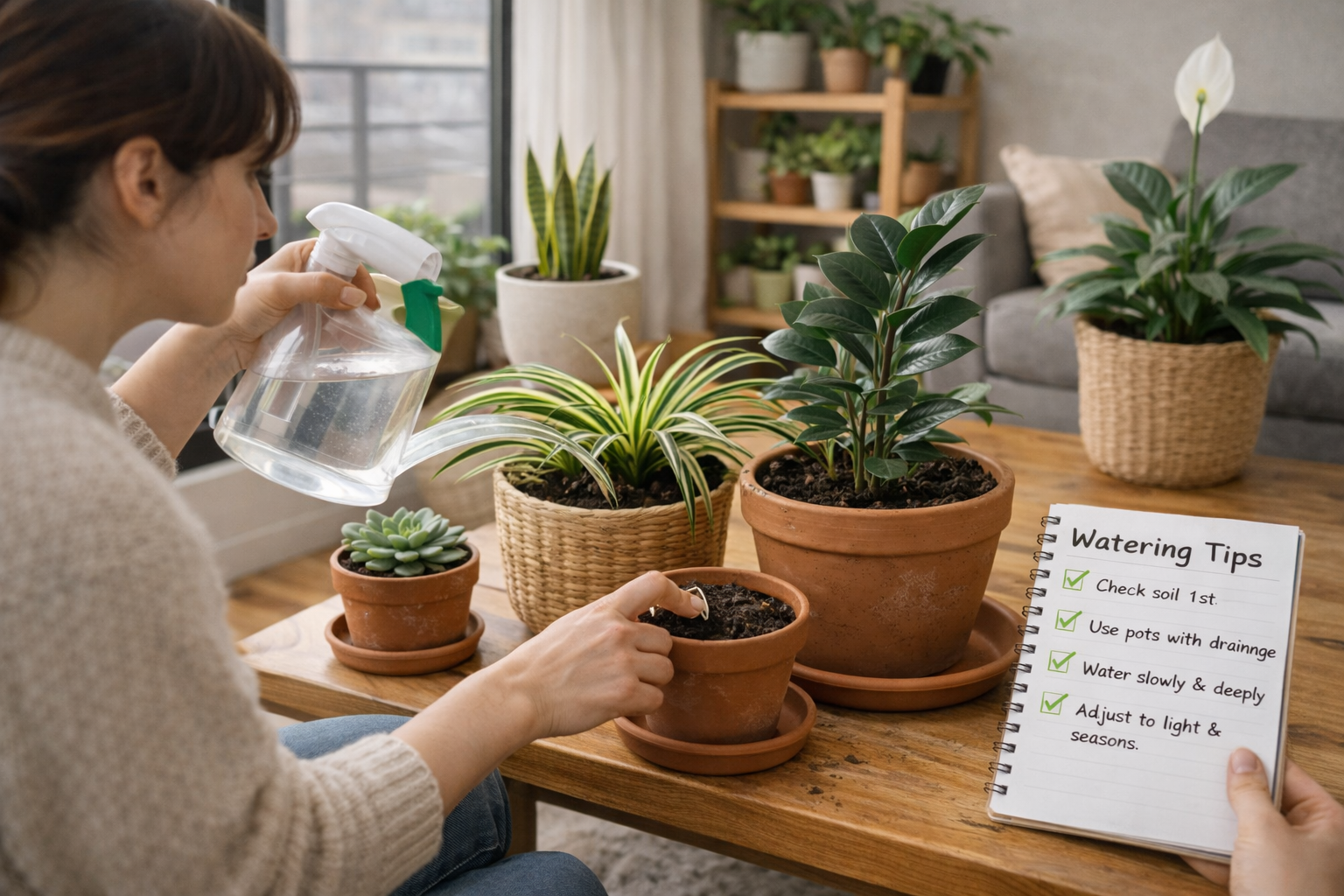
Watering plants may seem simple, but it is one of the most common causes of problems for indoor plants, especially in apartments. Many plants suffer not because they receive too little water, but because they receive too much or are watered incorrectly.
Apartment environments have unique characteristics: limited airflow, controlled temperatures, and pots that restrict root growth. Because of this, watering needs to be done thoughtfully and intentionally. When you learn how to water plants the right way, plant care becomes easier, more predictable, and far more successful.
This guide will help you understand how to water apartment plants properly, avoid common mistakes, and build confidence in your daily care routine.
Why Watering Is Different in Apartments
In outdoor environments, rain, wind, and natural drainage help regulate soil moisture. In apartments, plants rely entirely on you for water and balance.
Indoor conditions mean:
- Water evaporates more slowly
- Soil stays wet longer
- Roots have limited space
Because of this, incorrect watering can cause problems much faster indoors than outdoors.
Understanding What Plants Really Need from Water
Water does more than just hydrate a plant. It helps transport nutrients, supports structure, and allows photosynthesis to function properly.
Healthy watering habits ensure:
- Roots receive oxygen
- Nutrients are absorbed evenly
- Growth remains steady
Too much water removes oxygen from the soil, while too little water slows growth and stresses the plant.
Why Overwatering Is the Most Common Mistake
Overwatering is the leading cause of indoor plant failure. Many people water plants on a schedule instead of based on actual need.
When plants are overwatered:
- Roots begin to rot
- Soil becomes compacted
- Fungal problems may appear
Understanding that plants do not need constant moisture is essential for success.
How to Check If a Plant Really Needs Water
The best way to know when to water is to check the soil directly.
Simple methods include:
- Inserting your finger about one inch into the soil
- Feeling the soil’s texture and temperature
- Observing the plant’s leaves and posture
If the soil feels moist, wait. If it feels dry, watering is usually safe.
Watering Based on Plant Type
Not all plants have the same watering needs. Some store water in their leaves or roots, while others prefer consistently moist soil.
Plants with thick leaves usually need less frequent watering. Plants with thin or delicate leaves often require more consistent moisture.
Learning your plant’s natural behavior helps you water more accurately.
The Importance of Proper Drainage
Drainage is essential when watering plants in apartments. Without drainage, excess water remains trapped in the pot, damaging roots over time.
Healthy drainage practices include:
- Using pots with drainage holes
- Emptying saucers after watering
- Avoiding decorative pots without inner drainage
Proper drainage allows plants to absorb what they need and release the rest.
How Much Water Is Enough?
Watering is not about quantity but about saturation. When you water, the goal is to moisten the soil evenly.
Correct watering technique:
- Water slowly
- Allow water to reach the roots
- Stop when water drains from the bottom
Light surface watering is usually ineffective and can cause shallow root growth.
Why Watering Frequency Changes Over Time
Plants do not need the same amount of water all year long. Light, temperature, and growth cycles influence watering needs.
During warmer or brighter periods:
- Plants may need water more often
During colder or darker periods:
- Watering frequency should decrease
Adjusting your routine seasonally prevents overwatering.
Watering and Light Work Together
Light and water are closely connected. Plants in brighter locations use water faster than plants in low-light areas.
This means:
- Plants near windows may dry out sooner
- Plants in darker rooms retain moisture longer
Never water all plants the same way without considering their light exposure.
Morning vs. Evening Watering Indoors
In apartments, watering time is less critical than outdoors, but consistency still helps.
Watering earlier in the day allows:
- Excess moisture to evaporate gradually
- Plants to absorb water during active periods
Avoid watering late at night if possible, as soil stays wet longer.
The Role of Pot Size in Watering
Pot size directly affects how long soil stays moist.
Larger pots:
- Hold more water
- Dry out more slowly
Smaller pots:
- Dry out faster
- Require more frequent checks
Always match watering habits to pot size.
Recognizing Signs of Underwatering
Underwatered plants show clear signs when moisture is lacking.
Common signs include:
- Drooping leaves
- Dry, crispy edges
- Soil pulling away from pot edges
Responding early helps plants recover quickly.
Recognizing Signs of Overwatering
Overwatered plants often appear unhealthy even though the soil is wet.
Common signs include:
- Yellowing leaves
- Soft or mushy stems
- Persistent moisture in the soil
If these signs appear, reduce watering immediately.
Using Water Quality to Your Advantage
Water quality can affect plant health. Extremely cold or chemically treated water may stress plants.
Best practices:
- Use room-temperature water
- Let tap water sit briefly before use if possible
- Avoid using softened water
Gentle watering supports healthier roots.
Avoiding Watering on a Fixed Schedule
Plants do not follow calendars. Watering on fixed days often leads to mistakes.
Instead:
- Observe the plant
- Check the soil
- Adjust based on conditions
This flexible approach prevents stress and root damage.
Building Confidence with Experience
Watering becomes easier with time. As you observe your plants, you’ll naturally recognize when they need water.
Confidence grows when:
- Plants respond positively
- Growth becomes steady
- Problems decrease
Mistakes are part of the learning process.
Creating a Balanced Watering Routine
A balanced routine focuses on observation, not strict rules.
A healthy routine includes:
- Regular soil checks
- Thoughtful watering
- Adjustments as needed
This keeps plants healthy without unnecessary effort.
Long-Term Success with Proper Watering
Correct watering is the foundation of indoor plant health. When plants receive water the right way, other aspects of care become much simpler.
By understanding your apartment environment and your plants’ needs, you create conditions where plants grow steadily, stay resilient, and remain beautiful over time.