
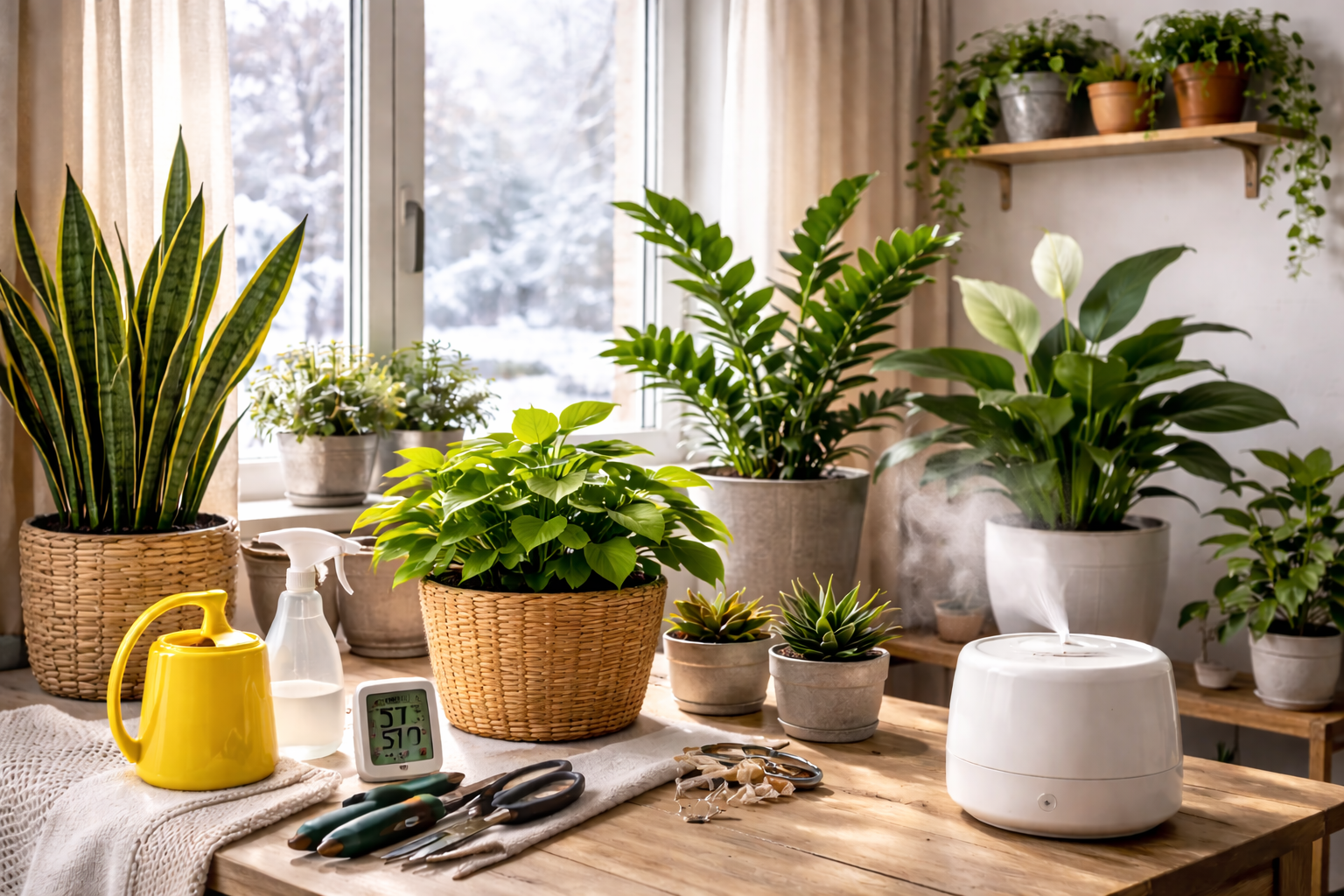
Winter can be a challenging season for apartment plants. Shorter days, lower light levels, colder temperatures, and dry indoor air can slow plant growth and cause stress if care routines remain the same as in warmer months. While plants may not look as vibrant during winter, proper care helps them stay healthy and ready to grow again when spring arrives.
This article explains how to care for apartment plants during the winter in a simple, effective, and realistic way. You will learn how to adjust watering, light exposure, temperature control, and daily routines to protect your plants throughout the cold season.
Why Winter Affects Apartment Plants Differently
During winter, most houseplants enter a period of slower growth. Even though they live indoors, they are still influenced by seasonal changes such as reduced daylight and cooler temperatures.
Plants use less energy during this time, which means they need less water and nutrients. Continuing summer care habits during winter often leads to problems like root rot, yellow leaves, or weakened plants.
Understanding this natural slowdown is the first step to proper winter care.
Understanding Light Changes in Winter
One of the biggest challenges in winter is reduced sunlight. Days are shorter, and sunlight is often weaker and less direct.
Plants that thrived near windows in summer may not receive enough light in winter. Growth may slow, leaves may drop, or plants may lean toward light sources.
To help plants adapt, move them closer to windows that receive the most daylight, especially south- or west-facing windows if available.
Making the Most of Natural and Artificial Light
Maximizing light exposure is essential during winter. Keep windows clean to allow more sunlight in, and avoid heavy curtains during the day.
If natural light is very limited, artificial grow lights can help. These lights provide consistent brightness and support plant health without overheating the space.
Even a few hours of additional light per day can make a noticeable difference for apartment plants.
Adjusting Watering During the Winter Months
Overwatering is one of the most common winter mistakes. Because plants grow more slowly, they absorb water at a reduced rate.
Soil takes longer to dry, and watering too frequently can lead to root rot. Always check soil moisture before watering.
In most cases, apartment plants need significantly less water in winter than in summer. Allow the top layer of soil to dry before watering again.
Recognizing Signs of Overwatering and Underwatering
Yellowing leaves, soft stems, or a musty smell from the soil often indicate overwatering. On the other hand, dry, crispy leaves may signal underwatering or low humidity.
Observing these signs helps you adjust care routines quickly. In winter, it is usually safer to underwater slightly than to overwater.
Each plant responds differently, so observation is key.
Managing Indoor Temperature Changes
Winter temperatures inside apartments can fluctuate due to heaters, cold drafts, and nighttime cooling.
Most houseplants prefer stable temperatures. Sudden changes can stress plants and cause leaf drop or slowed growth.
Avoid placing plants near radiators, heaters, or cold windows. Keep them away from doors that are frequently opened during cold weather.
Protecting Plants from Cold Drafts
Cold drafts are especially harmful during winter. Even brief exposure to cold air can damage leaves and roots.
Check areas near windows and doors for drafts. Moving plants slightly away from these spots can prevent cold stress.
If needed, use insulating curtains at night while ensuring plants still receive daylight during the day.
Dealing with Dry Indoor Air
Heating systems often dry out indoor air, reducing humidity levels. Many houseplants, especially tropical ones, struggle in dry environments.
Low humidity can cause brown leaf tips, curling leaves, or slowed growth. Plants like ferns, calatheas, and peace lilies are particularly sensitive.
Increasing humidity helps plants stay comfortable during winter.
Simple Ways to Increase Humidity in Apartments
Grouping plants together creates a microclimate with higher humidity. Placing a shallow tray of water near plants can also help.
Light misting may be beneficial for some plants, but it should be done carefully to avoid fungal issues.
Humidifiers are another effective option, especially in very dry apartments.
Reducing Fertilization During Winter
Winter is not an active growth period for most apartment plants, so fertilizing should be reduced or paused altogether.
Fertilizer encourages growth, which plants cannot sustain under low light and cooler conditions. This can weaken roots and damage foliage.
Resume regular fertilization in spring when plants naturally begin growing again.
Cleaning and Maintaining Leaves in Winter
Dust accumulates more quickly during winter due to closed windows and heating systems. Dust blocks light absorption and reduces photosynthesis.
Gently wiping leaves with a damp cloth helps plants make better use of limited light. This also allows you to check for pests or damage.
Clean leaves support overall plant health during low-light months.
Watching for Winter Pests
Although pest activity often slows in winter, some pests thrive in dry indoor conditions. Spider mites are particularly common during colder months.
Regularly inspect leaves, especially the undersides, for small spots, webbing, or discoloration.
Maintaining proper humidity and cleanliness helps prevent pest infestations.
Choosing the Right Plants for Winter Conditions
Some plants naturally tolerate winter conditions better than others. Snake plants, ZZ plants, pothos, and cast iron plants are known for their resilience.
These plants adapt well to low light, irregular watering, and temperature changes, making them ideal for winter care.
If you struggle with winter plant maintenance, choosing hardy species reduces stress and effort.
Avoiding Repotting During Winter
Winter is not the best time to repot plants. Repotting encourages new growth, which plants are less capable of sustaining during this season.
Unless a plant is severely root-bound or unhealthy, it’s best to wait until spring for repotting.
Allowing plants to rest during winter supports stronger growth later.
Adjusting Plant Placement Strategically
Winter is a good time to reassess plant placement. Move plants to areas where they receive more light and stable temperatures.
Rotating plants occasionally helps ensure even light exposure. This prevents leaning and uneven growth.
Small adjustments in placement can greatly improve plant comfort during winter.
Understanding Dormancy and Slow Growth
Some plants may appear inactive during winter, showing little or no growth. This is completely normal and not a sign of poor health.
Dormancy allows plants to conserve energy and survive unfavorable conditions. Trying to force growth during this period can cause harm.
Patience is essential when caring for apartment plants in winter.
Creating a Simple Winter Care Routine
Consistency matters more than intensity during winter. Check soil moisture weekly, monitor light exposure, and observe plant appearance.
Avoid drastic changes and focus on maintaining stable conditions. A calm, steady routine helps plants adjust naturally.
Winter care should be gentle and minimal.
Helping Apartment Plants Thrive Through the Cold Season
Caring for apartment plants during winter requires a shift in mindset. Instead of encouraging growth, the goal is to maintain health and stability.
By adjusting watering, light, humidity, and temperature control, plants can safely rest through winter without damage.
When spring arrives, well-cared-for plants will respond with stronger growth and renewed vitality. Winter becomes not a threat, but a necessary pause that prepares your apartment garden for the seasons ahead.