
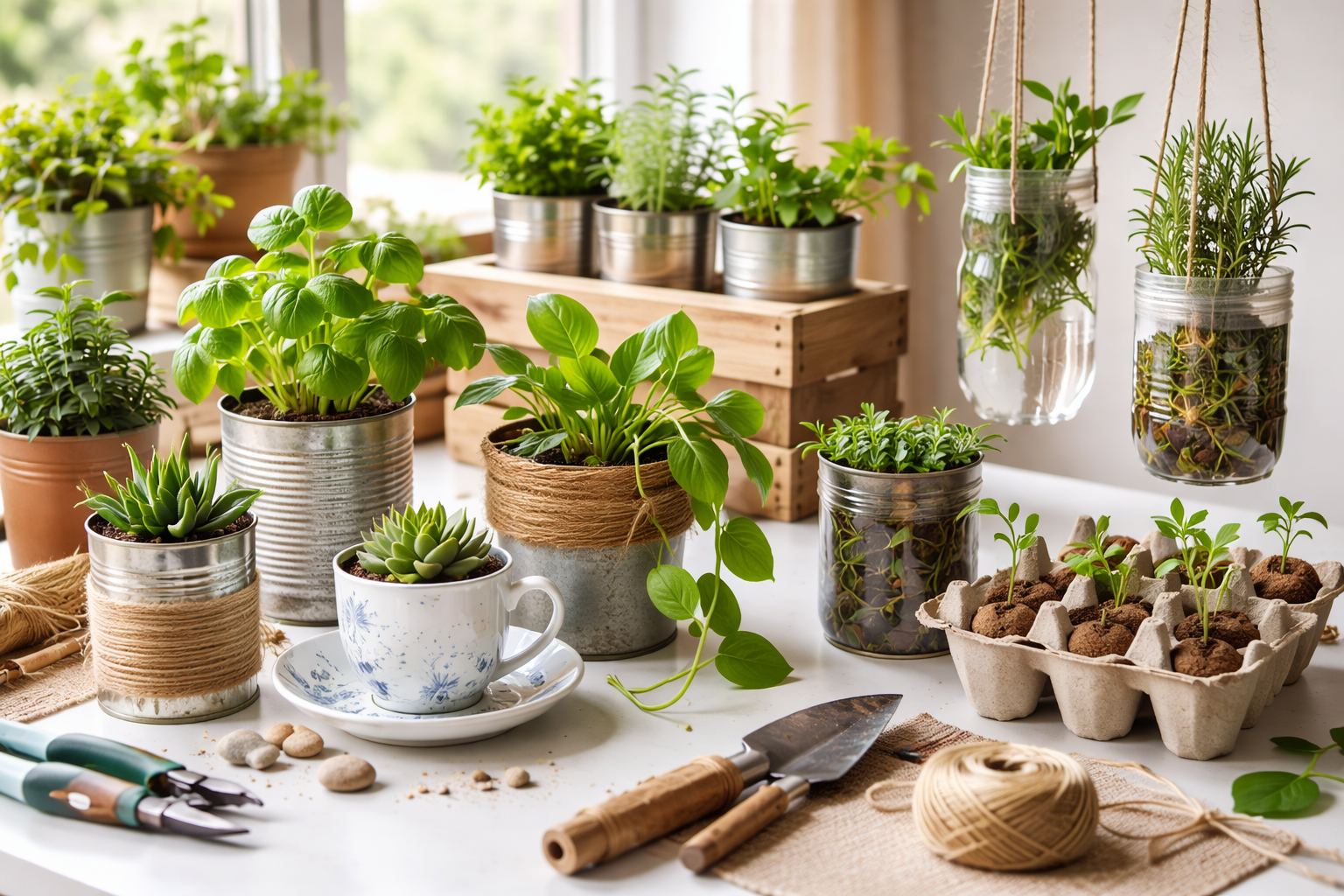
Living in an apartment doesn’t mean you need to spend a lot of money to enjoy plants. In fact, many everyday items that would normally be thrown away can be transformed into creative, functional, and eco-friendly planters. Reusing materials for planting is not only budget-friendly, but also sustainable and perfect for small spaces.
This article will show you how to reuse common household materials to grow plants in an apartment. You’ll learn practical ideas, care tips, and safety considerations, all in a simple and accessible way. Whether you are a beginner or already enjoy indoor plants, these ideas will help you create a greener home with less waste.
Why Reusing Materials Is Ideal for Apartment Gardening
Apartment gardening comes with limitations such as reduced space, limited storage, and the need for practical solutions. Reusing materials solves many of these challenges at once.
By repurposing items you already have, you reduce clutter, save money, and avoid unnecessary purchases. It also allows you to customize planters to fit shelves, windowsills, or small corners that standard pots may not suit.
Additionally, reusing materials supports a more sustainable lifestyle, which aligns well with modern urban living.
Important Safety and Drainage Considerations
Before turning any object into a planter, it’s essential to think about plant health. Drainage is one of the most important factors.
Most plants need containers with drainage holes to prevent water from accumulating at the bottom. Excess water can cause root rot and attract pests. If the material you are reusing does not have holes, you can carefully create small openings or add a drainage layer with stones or gravel.
Also, avoid materials that once held toxic substances or strong chemicals. Containers should always be clean and safe for plant use.
Plastic Bottles as Creative Planters
Plastic bottles are one of the most versatile materials for reuse. They are lightweight, easy to cut, and perfect for small plants.
You can cut bottles horizontally to create small pots or vertically to make deeper containers. Bottles are ideal for herbs, succulents, and small leafy plants.
They also work well for vertical gardens. By attaching bottles to walls or railings, you can grow multiple plants without taking up floor space, which is perfect for apartments.
Glass Jars and Containers for Decorative Plants
Glass jars, such as those used for food storage, can become beautiful decorative planters. They are especially suitable for plants that don’t require frequent watering.
These containers work well for succulents, air plants, or plants grown in water, such as pothos cuttings. Because glass has no drainage, it’s important to water carefully and avoid excess moisture.
Glass planters look great on shelves, desks, and kitchen counters, adding a clean and modern aesthetic to your apartment.
Using Cans and Metal Containers
Food cans and metal containers can easily be repurposed into planters. After cleaning them thoroughly, you can punch small holes at the bottom for drainage.
Metal containers are great for herbs and small plants. To improve their appearance, you can paint them, wrap them with fabric, or use natural materials like rope.
Make sure the edges are smooth to avoid injury, and consider placing a small tray underneath to catch excess water.
Reusing Wooden Boxes and Crates
Wooden boxes, fruit crates, and small pallets can be excellent planters for apartments with a bit more space.
These materials are ideal for creating mini indoor gardens or grouping several plants together. You can line the inside with plastic or fabric before adding soil to protect the wood and prevent leaks.
Wooden planters add a warm, natural look to apartments and work especially well in living rooms and balconies.
Old Cups, Bowls, and Kitchen Items
Many kitchen items can have a second life as plant containers. Old mugs, teacups, bowls, and even baking trays can be reused creatively.
These items are best suited for small plants or decorative greenery. Since most of them don’t have drainage holes, they should be used with caution.
Adding a layer of stones at the bottom and watering sparingly helps reduce the risk of overwatering.
Cardboard and Paper-Based Materials for Temporary Planting
Cardboard tubes, egg cartons, and paper cups can be used for temporary planting, especially for seedlings or plant propagation.
These materials are biodegradable and work well for short-term use. Once the plant grows stronger, it can be transferred to a more durable container.
This method is ideal for beginners who want to experiment without investing in permanent pots.
Creating Hanging Planters from Reused Materials
Hanging planters are perfect for apartments because they save floor space and add visual interest.
You can create hanging planters using plastic bottles, cans, or small containers combined with rope, wire, or fabric strips. These planters work well for trailing plants like pothos and philodendron.
Always ensure that hanging planters are securely attached and not too heavy for the support.
Choosing the Right Plants for Reused Containers
Not all plants are suitable for all containers. When reusing materials, choose plants that match the size and depth of the container.
Succulents, herbs, small ferns, and houseplants with shallow root systems are generally easier to manage in reused materials.
Avoid plants that grow very large or need deep soil unless the container can support proper root development.
Watering and Maintenance Tips
Reused containers often require more attention when it comes to watering. Because drainage may be limited, it’s important to check soil moisture regularly.
Water slowly and observe how the container responds. If water accumulates too easily, reduce the amount or frequency of watering.
Cleaning containers occasionally and checking for mold or pests helps keep plants healthy indoors.
Benefits of Reusing Materials for Apartment Plants
Reusing materials encourages creativity and personalization. Each planter becomes unique and reflects your style.
It also helps reduce waste, which is especially important in urban environments. Instead of discarding items, you give them a new purpose that adds value to your home.
For apartment dwellers, this approach makes plant care more accessible and less expensive.
Making Your Apartment Greener with Simple Choices
Reusing materials for planting in an apartment is a practical, sustainable, and rewarding choice. With a bit of creativity and basic care, everyday objects can become beautiful homes for plants.
You don’t need expensive pots or large spaces to enjoy indoor gardening. By starting small and using what you already have, you can build a greener, more welcoming apartment while reducing waste and costs.
A simple change in how you view everyday items can transform both your home and your relationship with plants.