
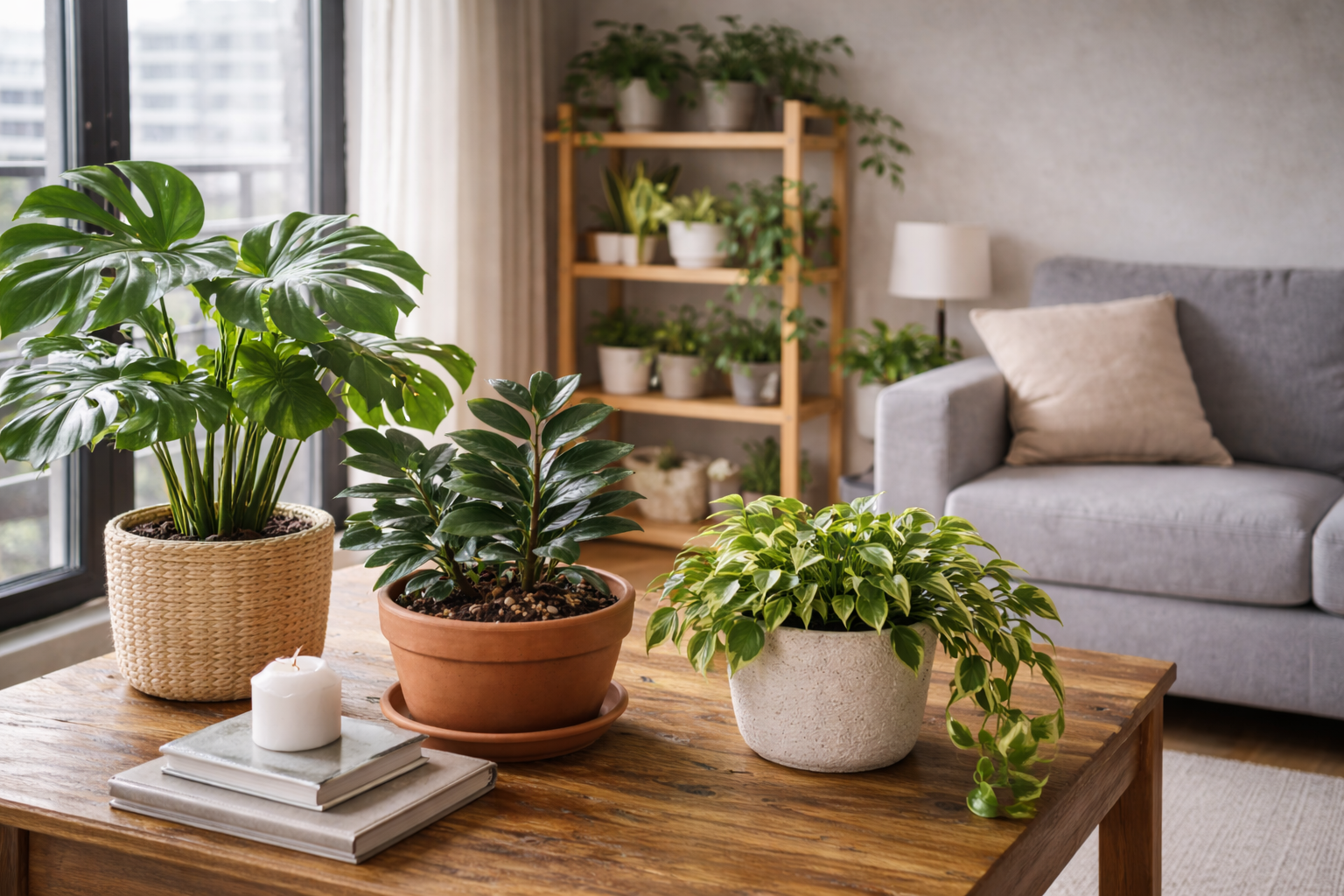
For many urban dwellers, the dream of a lush garden often hits a wall—literally. Living in an apartment without a balcony, patio, or terrace can feel like a sentence to a life without greenery. You might believe that without direct outdoor exposure, fresh air, and rain, plants are doomed to a slow, sad decline.
However, this is a myth. Some of the most stunning “urban jungles” exist entirely behind closed windows. In fact, keeping plants inside an apartment without a balcony often gives you more control over their environment. You don’t have to worry about storms, freezing nights, or outdoor pests eating your leaves.
The challenge lies in replicating nature within a confined, climate-controlled box. To succeed, you need to master light, humidity, and airflow. This guide will take you deep into the strategies of indoor gardening, ensuring your balcony-free apartment becomes a thriving green sanctuary.
Understanding the “Indoor Sun”: Mastering Window Light
The single biggest factor in keeping plants beautiful is light. Without a balcony, your windows are your lifeline. However, not all windows are created equal, and human eyes are terrible at judging light intensity. What looks bright to us can be pitch black to a plant.
Analyze Your Orientation
Before you buy a plant, check which way your windows face:
- North-Facing: These provide consistent, low-to-medium light. There is no direct sun. This is the “safe zone” for foliage plants that burn easily, but growth will be slower.
- South-Facing: The powerhouse. These windows offer the brightest light and often direct sun beams. This is prime real estate for cacti, succulents, and sun-loving tropicals.
- East-Facing: Captures the gentle morning sun. This is the “Goldilocks” zone—perfect for almost any common houseplant (Monstera, Ficus, Pothos).
- West-Facing: Offers intense, hot afternoon sun. This can be harsh. You may need to use a sheer curtain to diffuse the light to prevent scorched leaves.
The “Lux” Factor
Since you don’t have the abundance of outdoor light, you must place plants strategically. A plant placed five feet away from a window gets only about 50% of the light intensity of a plant placed on the windowsill. In a balcony-free apartment, “near the window” is the only place that matters.
The Secret Weapon: Artificial Grow Lights
If you live in a basement apartment, have small windows, or your view is blocked by another building, you are not disqualified from gardening. You just need technology.
In the past, grow lights were massive, purple, industrial fixtures. Today, you can buy “full-spectrum” LED bulbs. These look exactly like regular white light bulbs but provide the specific wavelengths plants need to photosynthesize.
How to Use Them:
Screw a full-spectrum LED bulb into a regular desk lamp or a clamp light. Point it at your plant for 8 to 12 hours a day. This allows you to turn a dark corner of your living room into a thriving green nook. For apartments without balconies, this is often the secret to keeping finicky plants like Fiddle Leaf Figs happy.
Airflow: The Missing Ingredient
When plants live on a balcony, the wind strengthens their stems and prevents pests from settling. Indoors, the air is stagnant. Stagnant air is the playground for mold, fungus, and pests like spider mites.
Create a Breeze
You don’t need a hurricane. Simply running a ceiling fan on low or using a small oscillating desk fan for a few hours a day can work wonders. The gentle movement strengthens the plant’s cellular structure and evaporates excess moisture on the leaves, preventing rot.
The “Open Window” Routine
Even if you don’t have a balcony, you likely have windows that open. Make it a habit to open them for 15 minutes a day, even in cooler weather. This exchanges the stale indoor air (which can be high in CO2 and pollutants) for fresh oxygen. Just be sure to move sensitive tropical plants away from the direct cold draft during winter.
Humidity Hacks for Dry Interiors
Apartments are often drier than the Sahara Desert, especially when the heater is on in winter or the AC is blasting in summer. Most houseplants come from tropical rainforests where humidity is 70% or higher. In your apartment, it might be 30%.
When humidity is low, leaves turn brown at the tips, curl up, and look “crispy.” Since you can’t rely on outdoor dew, you must engineer humidity.
- Grouping Plants: Plants release moisture through their leaves (transpiration). By clustering 5 or 10 plants together, they create a micro-climate of higher humidity for each other.
- Pebble Trays: Place a layer of stones in a shallow tray and fill it with water. Sit your pot on top of the stones (ensure the pot isn’t touching the water). As the water evaporates, it rises directly up to the foliage.
- Humidifiers: Misting with a spray bottle is largely ineffective because the water evaporates in minutes. A small electric humidifier is the best investment for keeping plants beautiful long-term.
Selecting the Right Species for “Indoor Only” Life
Some plants simply crave the outdoors. Trying to grow a rose bush, a tomato plant, or a lavender shrub inside an apartment without a balcony is a recipe for heartbreak. They need the intensity of full outdoor sun.
To maintain a beautiful garden, choose plants that actually prefer being indoors.
The Indestructibles (Low Light tolerant):
- Snake Plant (Sansevieria): sculptural and tough.
- ZZ Plant (Zamioculcas): glossy and drought-tolerant.
- Cast Iron Plant (Aspidistra): lives up to its name.
The Trailers (Great for shelves):
- Pothos (Epipremnum): grows fast and communicates when it needs water.
- Heartleaf Philodendron: elegant and easy.
- Hoya: waxy leaves that hold water well.
The Statement Pieces:
- Rubber Tree (Ficus Elastica): loves bright indoor light.
- Monstera Deliciosa: the king of the indoor jungle.
- Dracaena: provides height without taking up much width.
The Dust Factor: Cleaning Your Foliage
Outdoors, rain washes the dust off plants. Indoors, dust accumulates on the leaves. This isn’t just an aesthetic issue; a layer of dust blocks sunlight, making it harder for the plant to photosynthesize. It basically suffocates the plant.
The Wipe-Down Ritual
Once or twice a month, take a damp microfiber cloth and gently wipe the tops and bottoms of the leaves. This keeps them shiny and beautiful.
The Shower Method
Since you don’t have a balcony to hose them down, use your bathroom. Place your plants in the shower and gently run lukewarm water over them. This mimics a tropical rainstorm, washes away dust, and flushes pests out of the soil. Let them drain completely in the tub before moving them back to their spots.
Water Management Without Drainage Holes
On a balcony, if you overwater a plant, the excess flows out onto the concrete. Indoors, it flows onto your expensive rug or hardwood floor.
Because of this risk, many people use “cachepots”—decorative pots without holes—to hold the ugly plastic nursery pot. The danger here is that water pools at the bottom of the ceramic pot. The roots sit in this stagnant water and rot. Root rot is the number one killer of indoor plants.
The 15-Minute Rule
Water your plant thoroughly. Wait 15 minutes. Then, lift the plastic nursery pot out of the decorative planter and check the bottom. If there is water sitting there, dump it out immediately. Never let a plant sit in water.
Fertilizing in a Closed System
In nature, soil is replenished by decaying matter. In a pot, the soil is a finite resource. Once the plant eats the nutrients, they are gone.
However, indoor plants receive less light than outdoor plants, which means their metabolism is slower. They eat less. If you fertilize them as heavily as a garden plant, unused fertilizer salts will build up in the soil and burn the roots.
The Dilution Solution
Use a high-quality liquid fertilizer, but dilute it to half the recommended strength. Only fertilize during the growing season (Spring and Summer). If you don’t see new leaves growing, don’t feed the plant.
Vertical Gardening: Solving the Space Issue
Apartments without balconies often lack square footage. If you fill your floor with pots, you have nowhere to walk. The solution is to go up.
Utilize Top-Tier Space
The tops of kitchen cabinets, refrigerators, and tall bookshelves are often wasted space. Place trailing plants (like Pothos) up there. Their vines will cascade down, creating a green curtain effect that makes the room feel taller and more organic.
Hanging Planters and Tension Rods
Drilling holes might not be allowed if you rent. Use a tension rod inside a window frame to hang multiple planters. This maximizes your window space, allowing you to fit 3 or 4 plants in the space of one.
Rotation for Symmetrical Growth
The sun moves across the sky, but your window is stationary. Indoors, plants have a strong tendency to grow toward the light source. This results in a plant that is lush on one side and bald on the other, or a stem that leans dangerously.
The Quarter Turn
Every time you water your plants (or once a week), rotate the pot by 90 degrees (a quarter turn). This ensures that all sides of the plant get equal exposure to the light. It keeps the growth straight, bushy, and symmetrical.
Conclusion
Living in an apartment without a balcony is not a barrier to having a green thumb; it is simply a different style of gardening. It requires you to be more observant of light and more disciplined with water.
By choosing the right species—those that evolved to grow on the shaded forest floor rather than the open desert—and by using modern tools like grow lights and humidifiers, you can create an environment that rivals any outdoor garden.
In fact, indoor plants often look more pristine and perfect than their outdoor counterparts because they are protected from the harsh elements. So, embrace your indoor space. With a little care and attention, your windowless corners and small living room can bloom into a vibrant, air-purifying oasis. The lack of a balcony is not a limitation; it is an invitation to bring nature inside, right where you live.