
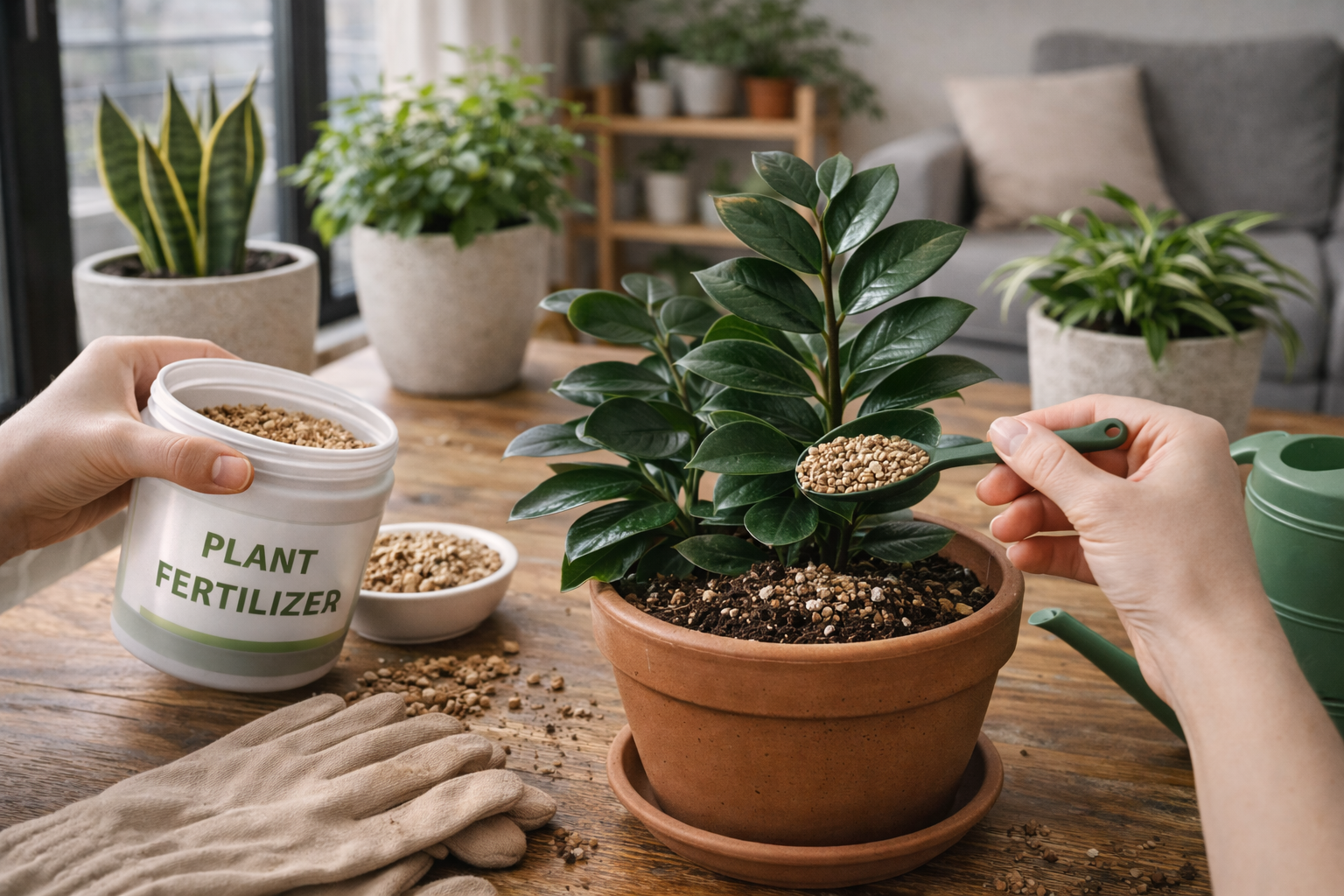
Living in an apartment often means creating your own sanctuary of greenery amidst the concrete. Whether you have a solitary Monstera in the corner or a windowsill full of succulents, caring for indoor plants is a rewarding hobby. However, there is one aspect of plant parenthood that often intimidates apartment dwellers: fertilization.
Many people skip this step entirely because they are afraid of “burning” their plants, or they worry that fertilizers will smell bad in a small space. Others simply don’t know which product to buy. The result? Plants that survive, but never truly thrive.
The truth is that fertilizing indoor plants doesn’t have to be a complex chemistry experiment. It can be clean, odorless, and incredibly simple. This guide will walk you through everything you need to know to feed your apartment garden without the headache.
Why Do Apartment Plants Need Fertilizer?
To understand why we need to fertilize, we first need to understand the difference between nature and a pot. In nature, plants have infinite room for their roots to stretch out and find nutrients. Decaying leaves, insects, and rain constantly replenish the soil.
In an apartment, your plant is living in a “closed system.” The potting mix provides structure and retains water, but it usually only contains enough nutrients to last for about two to three months after you buy the plant. Once the plant uses up those minerals, it begins to starve.
Watering alone isn’t enough. Water provides hydration, but fertilizer provides the “food” (minerals) required for photosynthesis, root growth, and flowering. If you want lush, green leaves and steady growth, you must replenish the soil’s nutrient bank.
Understanding the Basics: The N-P-K Code
If you look at any fertilizer bottle, you will see three numbers separated by dashes, such as 10-10-10 or 5-1-1. This is the N-P-K ratio. It might look like a math problem, but it is actually a simple menu for your plants.
Here is what it stands for:
- N (Nitrogen): This is for the leaves. Nitrogen promotes bright green color and leafy growth. If you have foliage plants like Pothos, Philodendrons, or Fiddle Leaf Figs, they love Nitrogen.
- P (Phosphorus): This is for roots and blooms. It helps young plants establish strong root systems and encourages flowering plants (like African Violets or Peace Lilies) to produce buds.
- K (Potassium): This is for overall health. Potassium helps the plant move water and nutrients around its system. It makes the plant more resilient to stress, diseases, and temperature changes.
The Simple Rule: For most indoor foliage plants, a “balanced” fertilizer (where the numbers are roughly equal, like 10-10-10) is a perfect, no-stress choice.
The Best Fertilizer Types for Small Spaces
In a house with a yard, you might use bags of manure or granular compost. In an apartment, space and smell are major concerns. Here are the best formats for indoor gardeners:
1. Liquid Fertilizers (Concentrates)
This is the most popular choice for apartments. You buy a small bottle of concentrated liquid and mix a few drops into your watering can.
- Pros: You have total control over the dosage. The plant absorbs it immediately.
- Cons: You have to remember to mix it every time you feed.
2. Slow-Release Pellets
These are small beads that you sprinkle on top of the soil or mix into the potting soil. Every time you water, a small amount of fertilizer is released.
- Pros: The “set it and forget it” method. Great for busy people. One application lasts 3 to 6 months.
- Cons: Harder to control the exact dosage if a plant starts looking stressed.
3. Fertilizer Spikes
These are compressed sticks of nutrients that you push into the soil.
- Pros: Extremely easy. No measuring required.
- Cons: The nutrients are concentrated in one spot, which can sometimes burn roots near the spike while starving roots on the other side of the pot.
Organic vs. Synthetic: The Smell Factor
For apartment dwellers, the debate between organic and synthetic is often decided by one factor: odor.
Synthetic Fertilizers are man-made minerals. They usually come as blue or green crystals or clear liquids.
- Apartment Verdict: Excellent. They are generally odorless, sterile, and act fast. They are very safe for small spaces where airflow might be limited.
Organic Fertilizers are derived from plant or animal matter (seaweed, fish emulsion, manure).
- Apartment Verdict: Be careful. Fish emulsion is fantastic for plants, but it smells like a fishing pier—not ideal for a studio apartment. However, Worm Castings (earthworm poop) are the gold standard for organic indoor gardening. They are completely odorless, look like dirt, and are impossible to overdose.
Step-by-Step: How to Apply Fertilizer Correctly
Ready to feed your plants? Follow this simple routine to ensure safety and success.
Step 1: Check the Season
Only fertilize during the growing season (usually Spring and Summer). When the days get shorter and colder (Fall and Winter), most plants go dormant. Feeding them now is like forcing someone to eat a buffet while they are sleeping; it causes health problems.
Step 2: Water First
Never apply fertilizer to bone-dry soil. If the roots are dehydrated, a strong dose of fertilizer can cause “root burn.” Water your plant lightly first to moisten the soil, then apply the fertilizer.
Step 3: Dilute More Than the Label Says
This is the secret to “No Complication.” Fertilizer companies want you to use more product. For indoor plants, less is more. If the bottle says “1 capful per liter,” use half a capful. It is always better to under-fertilize than to over-fertilize.
Step 4: Apply
Pour your fertilizer water evenly around the soil, not just in one spot. Avoid splashing the leaves, as fertilizer salts can leave marks or burn foliage.
Kitchen Scraps: DIY Fertilizers That Actually Work
If you want to be sustainable, you can use kitchen waste. However, in an apartment, you must be careful to avoid attracting pests like fruit flies or fungus gnats.
- Banana Peel Water: Soak banana peels in water for 24 hours. Remove the peels and use the water. It adds a boost of Potassium.
- Eggshells: Wash them, dry them thoroughly, and crush them into a fine powder. Sprinkle on the soil for Calcium. Note: Do not just throw wet shells in the pot; they will rot and smell.
- Coffee Grounds: Used coffee grounds are rich in Nitrogen, but they are acidic. Only use them occasionally on acid-loving plants like Ferns or Philodendrons. Ensure the grounds are dry to prevent mold growth on your soil.
Signs Your Plants Are Hungry (Or Overfed)
How do you know if your strategy is working? Your plant will tell you.
Signs of Deficiency (Needs Food):
- Pale Leaves: New leaves are coming in light green or yellow rather than deep green.
- Slow Growth: It’s spring, but the plant isn’t putting out new shoots.
- Small Leaves: The new leaves are significantly smaller than the old ones.
- Dropped Leaves: Older leaves turn yellow and fall off as the plant sacrifices them to support new growth.
Signs of Over-Fertilization (Too Much Food):
- Crusty Soil: A white or yellow crust forms on the soil surface or the rim of the pot. This is salt buildup.
- Brown Tips: The tips and edges of the leaves turn brown and crispy (often mistaken for lack of humidity).
- Yellowing: Lower leaves turn yellow and wilt rapidly.
The Fix for Over-fertilization:
If you think you used too much, take the plant to the shower or sink. Run lukewarm water through the soil for several minutes to “flush” out the excess salts. Let it drain completely.
Specific Needs for Popular Apartment Plants
Not all plants have the same appetite. Grouping them helps you stay organized.
The Heavy Feeders:
- Fiddle Leaf Fig, Monstera Deliciosa, Alocasia.
- These fast-growing tropicals need energy. Feed them every 2 to 4 weeks during spring and summer.
The Light Feeders:
- Snake Plants (Sansevieria), ZZ Plants, Pothos.
- These are hardy and slow-growing. Fertilize them only 2 or 3 times per year.
The Specialists:
- Succulents and Cacti.
- They need very little Nitrogen. Use a specialized cactus fertilizer. Feed only once or twice a year in the spring.
- Orchids.
- They need very weak fertilizer. Use a specialized orchid mist or dilute regular fertilizer to 1/4 strength.
A Seasonal Schedule for Apartment Gardeners
To keep things uncomplicated, sync your fertilizing with the calendar.
- March (Early Spring): The wake-up call. Start watering more frequently. Apply a half-dose of fertilizer to “break the fast.”
- April to August (Growing Season): Feed your “Heavy Feeders” once a month. Feed your “Light Feeders” every two months.
- September (Early Fall): Taper off. Give one last, weak feeding.
- October to February (Dormancy): Stop fertilizing. Let the plants rest. Water only when the soil is dry.
Note: If you use grow lights and keep your apartment very warm, your plants may grow year-round. In this specific case, you can continue to fertilize lightly through winter.
Conclusion
Fertilizing your apartment plants doesn’t require a degree in botany or a shed full of chemicals. It is simply about replenishing the nutrients that are lost over time in a potted environment.
By choosing a high-quality liquid fertilizer or a slow-release pellet, and following the “less is more” philosophy, you avoid the risks of burning your plants. Remember, the goal is to replicate the rich environment of the forest floor inside your living room.
Start small. Buy a balanced liquid fertilizer today, dilute it to half strength, and watch how your plants respond. Within a few weeks, you will likely see glossier leaves, perkier stems, and perhaps even a new leaf unfurling to say “thank you.”
Your urban jungle is an investment in your well-being. A little bit of plant food ensures that investment continues to grow, quite literally, for years to come.