
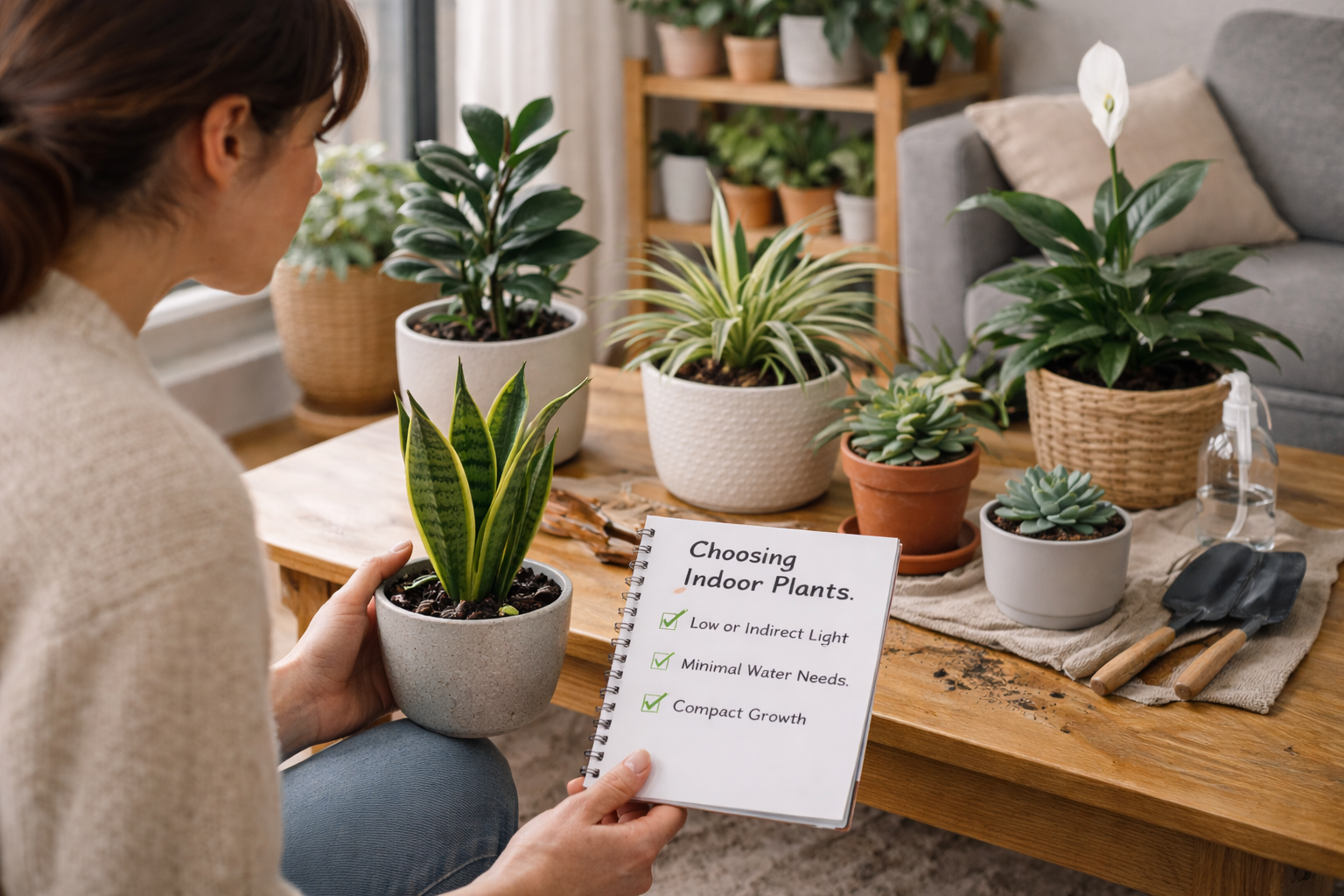
Choosing the right plants for indoor environments is one of the most important steps for anyone who lives in an apartment or house without outdoor garden space. Many people buy plants based on appearance alone, only to discover later that those plants struggle to survive indoors.
Indoor environments have specific conditions such as limited sunlight, controlled temperatures, and restricted airflow. Understanding these factors helps you select plants that will adapt naturally, grow steadily, and require less effort to maintain over time.
This guide will help you make smart, confident choices when selecting plants for indoor spaces, even if you have no prior experience.
Understanding What “Indoor Plants” Really Means
Not every plant sold in a store is truly suited for indoor life. Some plants are grown indoors temporarily but are actually outdoor species that need direct sunlight and natural airflow to thrive long-term.
Plants ideal for indoor environments are those that:
- Tolerate indirect or low light
- Adapt to stable indoor temperatures
- Grow well in containers
- Don’t require frequent watering
- Handle limited airflow
Knowing this difference prevents disappointment and plant loss.
Evaluating Light Conditions Inside Your Home
Light is the most critical factor when choosing indoor plants. Before buying any plant, you should understand how much natural light your space receives.
Observe your home during the day:
- Bright indirect light near windows
- Medium light a few feet away from windows
- Low light in corners, hallways, or rooms with small windows
Most indoor plants prefer indirect light. Very few plants can handle full, direct sunlight indoors.
Choosing Plants Based on Light Availability
Matching plants to your light conditions makes care much easier.
For low-light environments, choose plants that naturally grow under forest canopies. These plants evolved to survive with minimal sunlight.
For medium to bright indirect light, you have more flexibility and can choose from a wider variety of plants that grow faster and fuller.
Avoid choosing plants that require full sun unless you have large, unobstructed windows with strong sunlight.
Considering the Size of the Indoor Space
Indoor plants should fit the scale of the room. Large plants can overwhelm small spaces, while very small plants may feel lost in large rooms.
When choosing plants:
- Match plant size to available floor or shelf space
- Consider the plant’s mature size, not just its current size
- Leave room for growth
Compact plants are often the best choice for apartments and small rooms.
Growth Rate and Maintenance Level
Some plants grow quickly and require frequent pruning, while others grow slowly and maintain their shape for years.
For beginners or busy people, slow-growing plants are ideal. They require:
- Less frequent maintenance
- Fewer repotting sessions
- Less pruning
Fast-growing plants can be rewarding but require more attention and space.
Understanding Water Needs Before Buying
Watering habits should match your lifestyle. Some plants require frequent watering, while others store water in their leaves or roots.
If you tend to forget watering, choose plants that:
- Are drought-tolerant
- Have thick or waxy leaves
- Grow slowly
Choosing plants with lower water demands reduces stress and mistakes.
Importance of Humidity in Indoor Environments
Indoor air is often drier than outdoor air, especially in apartments with air conditioning or heating.
Plants that adapt well indoors usually tolerate average household humidity. Plants that require high humidity may struggle unless you provide extra care.
When choosing plants:
- Avoid species that need constant misting
- Prefer plants known for indoor adaptability
- Observe leaf texture, as thicker leaves usually tolerate dry air better
This helps maintain plant health with minimal effort.
Temperature Stability and Plant Selection
Indoor temperatures are generally stable, but sudden changes can still occur near windows, doors, or vents.
Plants ideal for indoor environments:
- Prefer consistent temperatures
- Don’t tolerate cold drafts
- Handle mild seasonal changes
Avoid placing sensitive plants near air conditioners, heaters, or frequently opened windows.
Choosing Plants That Thrive in Containers
Not all plants grow well in pots long-term. Indoor plants should adapt easily to container life.
Good container-friendly plants:
- Have compact root systems
- Don’t require deep soil
- Grow well in standard pots
Plants that quickly outgrow containers may struggle indoors.
Visual Style and Interior Design Harmony
Plants are also decorative elements. Choosing plants that match your interior style helps create harmony.
For modern spaces:
- Structured plants with upright growth
- Clean leaf shapes
For cozy or natural spaces:
- Trailing or leafy plants
- Softer shapes and textures
Choosing plants that complement your decor enhances the overall atmosphere.
Beginner-Friendly Plants for Indoor Spaces
If you’re new to plant care, start with forgiving plants that adapt easily.
Beginner-friendly plants typically:
- Recover well from small mistakes
- Show clear signs when they need care
- Require minimal intervention
Starting with easy plants builds confidence and experience.
Avoiding Plants That Are Too Demanding
Some plants are popular but difficult to maintain indoors. These plants often require:
- Precise watering schedules
- High humidity
- Strong sunlight
For beginners, these plants can cause frustration. It’s better to gain experience first before trying more demanding species.
Observing Plant Health Before Purchase
Always inspect plants before bringing them home. A healthy plant adapts better to indoor conditions.
Look for:
- Firm, green leaves
- No visible pests
- Healthy soil without strong odors
Avoid plants with yellowing leaves or signs of stress.
Giving Plants Time to Adapt Indoors
Even well-chosen plants need time to adjust to a new environment. Initial changes are normal.
During the first weeks:
- Avoid repotting immediately
- Maintain stable light and watering
- Observe changes gradually
Patience helps plants settle and grow stronger.
Choosing Fewer, Better Plants
It’s better to have a few well-chosen plants than many struggling ones. Quality always beats quantity indoors.
Start with:
- One or two plants per room
- Plants that match your light conditions
- Plants that fit your routine
This keeps care manageable and enjoyable.
Long-Term Success with Indoor Plants
Choosing the right plants is the foundation of long-term success. When plants match your environment, they naturally thrive with minimal effort.
Over time, you’ll:
- Understand plant needs more easily
- Make better choices
- Enjoy a healthier indoor environment
Indoor plants should add comfort, not stress.
Creating a Sustainable Indoor Plant Collection
A sustainable plant collection grows slowly and thoughtfully. Each new plant should serve a purpose and fit naturally into your space.
With the right choices, indoor plants become long-lasting companions that enhance your home, improve comfort, and bring nature closer to everyday life.