
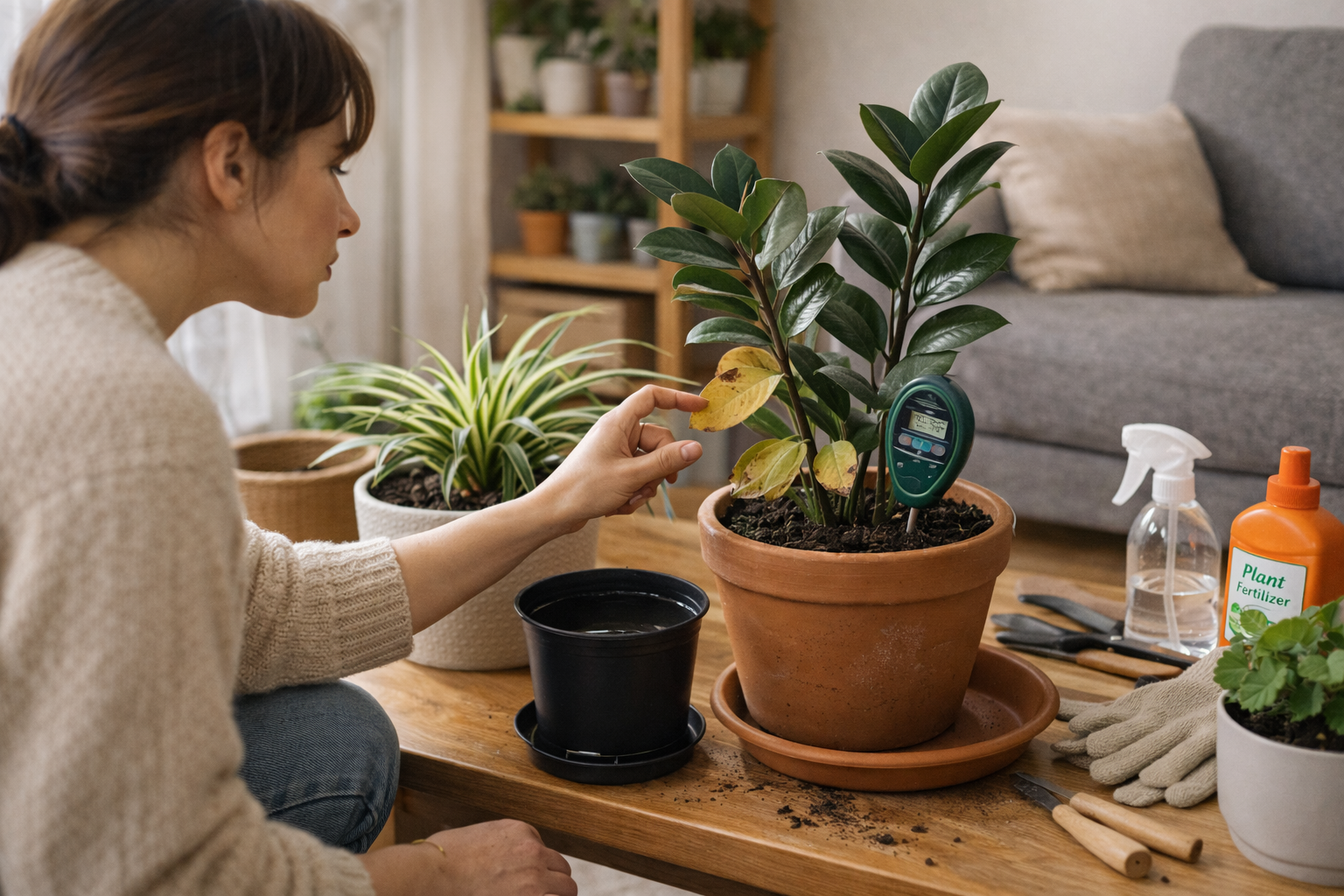
Caring for plants in an apartment can be a rewarding experience, but many people struggle in the beginning without understanding why their plants aren’t thriving. In most cases, the problem isn’t lack of effort — it’s small, common mistakes that gradually affect plant health.
The good news is that these mistakes are easy to fix once you know what to look for. In this article, you’ll learn the most common errors people make when caring for plants in apartments and how to avoid them, even if you’re a complete beginner.
Overwatering: The Most Common Mistake
Overwatering is the number one reason indoor plants fail. Many people assume that watering frequently means caring properly, but too much water can be more harmful than too little.
When plants receive excess water:
- Roots can rot
- Soil loses oxygen
- Fungi and pests may appear
How to avoid it:
- Always check the soil before watering
- Water only when the top layer feels dry
- Make sure excess water can drain properly
Remember: plants don’t follow a fixed watering schedule. Their needs change with seasons, light, and temperature.
Ignoring Light Requirements
Light plays a crucial role in plant growth, yet many apartment plant owners place plants wherever they look good rather than where they receive the right light.
Common lighting mistakes include:
- Putting low-light plants in direct sunlight
- Placing sun-loving plants in dark corners
- Assuming all indoor plants need the same light
How to avoid it:
- Observe how light moves through your apartment
- Place plants according to their light tolerance
- Rotate plants occasionally for even exposure
Correct lighting prevents weak growth, yellow leaves, and stress.
Choosing the Wrong Plants for Apartment Living
Not all plants are suitable for apartments. Some require intense sunlight, constant airflow, or outdoor conditions that apartments simply can’t provide.
Mistakes people make:
- Buying plants based only on appearance
- Choosing large plants for small spaces
- Ignoring plant care requirements
How to avoid it:
- Choose plants known for indoor adaptability
- Start with beginner-friendly varieties
- Match plant size to available space
Selecting the right plants from the beginning saves time and frustration.
Using Pots Without Drainage
Decorative pots are popular, but many of them lack drainage holes. Without proper drainage, water accumulates at the bottom, causing root problems.
Why this is harmful:
- Roots stay constantly wet
- Oxygen can’t reach the root system
- Root rot develops silently
How to avoid it:
- Use pots with drainage holes whenever possible
- Place a plastic pot inside decorative containers
- Empty excess water after watering
Proper drainage is essential for long-term plant health.
Watering on a Fixed Schedule
Many people water plants on the same day every week, regardless of whether the plant needs it or not. This habit often leads to overwatering.
Why fixed schedules don’t work:
- Plants absorb water at different rates
- Temperature and humidity affect soil moisture
- Seasonal changes alter plant needs
How to avoid it:
- Water based on soil condition, not the calendar
- Learn to recognize signs of thirst
- Adjust watering frequency throughout the year
Observation is more important than routine.
Moving Plants Too Often
Plants need stability to adapt to their environment. Frequently moving them from one spot to another can cause stress.
Problems caused by constant movement:
- Sudden light changes
- Temperature fluctuations
- Slow or stalled growth
How to avoid it:
- Find the best location early
- Let plants adjust before relocating
- Move plants only when necessary
Once a plant settles, it performs better with consistency.
Overusing Fertilizer
Beginners often believe that fertilizer will fix all plant problems. However, too much fertilizer can damage roots and leaves.
Common fertilizer mistakes:
- Fertilizing too often
- Using strong doses
- Fertilizing stressed or dry plants
How to avoid it:
- Follow recommended dilution instructions
- Fertilize only during active growth periods
- Avoid fertilizing newly purchased plants
Less is more when it comes to indoor plant nutrition.
Ignoring Temperature and Airflow
Apartments often have artificial heating and cooling, which can affect plant health more than people realize.
Common issues include:
- Placing plants near heaters or air conditioners
- Exposing plants to cold drafts
- Keeping plants in stagnant air
How to avoid it:
- Keep plants away from vents
- Maintain stable room temperatures
- Allow gentle air circulation
Balanced conditions help plants grow steadily.
Forgetting to Clean Plant Leaves
Dust naturally accumulates on plant leaves indoors, reducing their ability to absorb light.
Why dirty leaves are a problem:
- Reduced photosynthesis
- Increased pest risk
- Dull appearance
How to avoid it:
- Gently wipe leaves with a damp cloth
- Clean leaves every few weeks
- Avoid using harsh products
Clean leaves keep plants healthier and more attractive.
Expecting Instant Results
Plants grow slowly, especially indoors. Many beginners give up because they expect quick results.
Unrealistic expectations lead to:
- Overwatering
- Over-fertilizing
- Constant adjustments
How to avoid it:
- Be patient with plant growth
- Focus on consistency, not speed
- Celebrate small signs of improvement
Healthy plants develop over time.
Ignoring Early Warning Signs
Plants often show signs of stress before serious problems develop, but these signs are frequently ignored.
Common warning signs:
- Yellowing leaves
- Wilting
- Brown edges
How to avoid it:
- Inspect plants regularly
- Respond early to changes
- Adjust care gradually
Early action prevents long-term damage.
Comparing Different Plants Too Closely
Each plant has unique needs. Comparing one plant’s behavior to another can be misleading.
Why comparisons cause problems:
- Different watering needs
- Different growth speeds
- Different light tolerance
How to avoid it:
- Learn each plant individually
- Adjust care based on observation
- Avoid one-size-fits-all solutions
Understanding individuality leads to better results.
Building Better Habits Over Time
Plant care is a learning process. Mistakes are part of the journey, especially for beginners living in apartments.
Focus on:
- Observation
- Patience
- Consistency
Over time, caring for plants becomes intuitive and enjoyable.
Creating a Stress-Free Plant Care Experience
Avoiding common mistakes makes plant care simpler and more rewarding. When plants receive the right amount of water, light, and stability, they naturally thrive.
With small adjustments and mindful habits, your apartment plants can grow strong, healthy, and beautiful — without stress or frustration.