
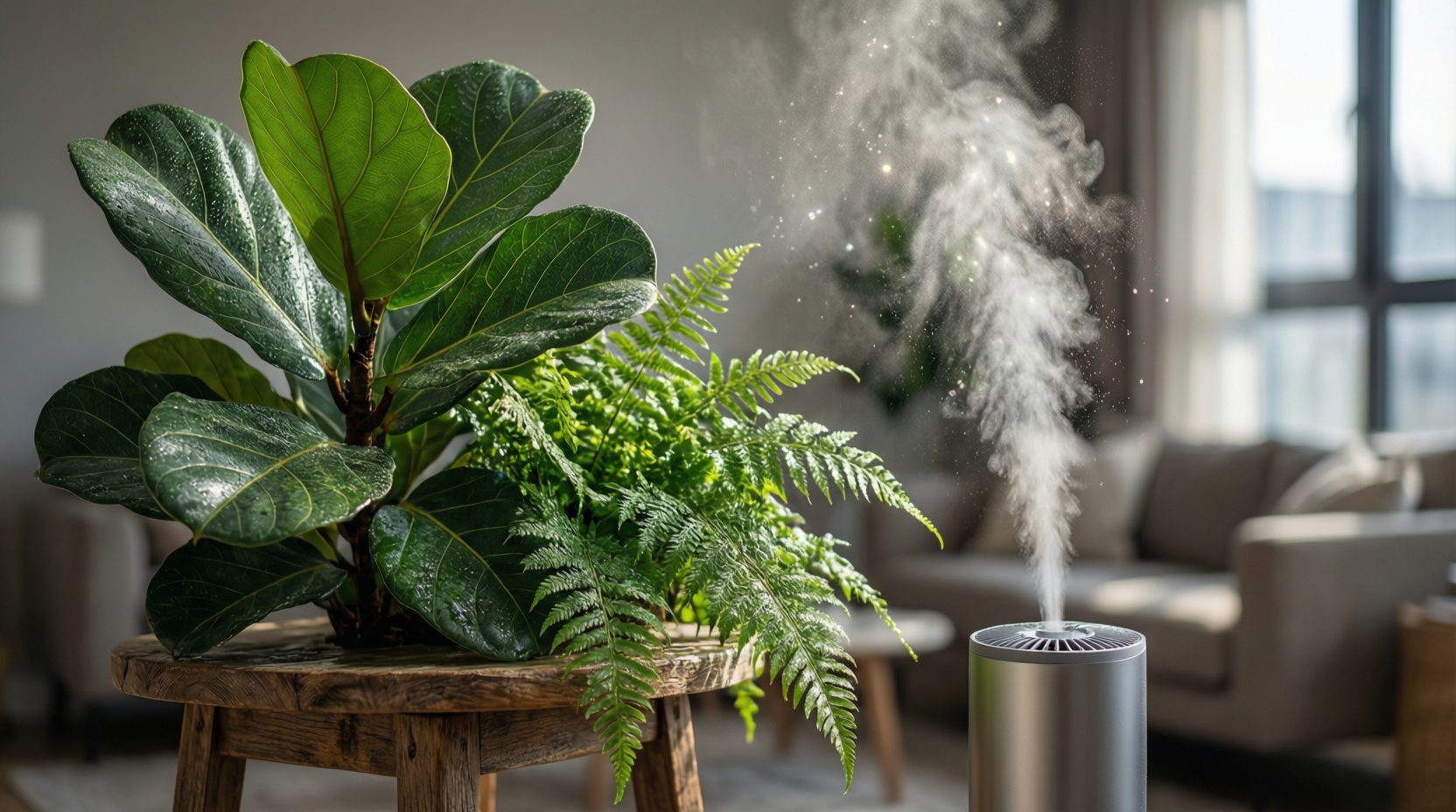
There is nothing quite like the relief of stepping into a cool, air-conditioned apartment after a sweltering summer day. You sigh in relief, but your indoor jungle might be silently screaming.
For modern apartment dwellers, air conditioning (AC) is often a non-negotiable necessity. However, for houseplants—most of which originate from humid, tropical rainforests—the AC unit is a formidable enemy. It blasts cold, dry air that can turn a lush Monstera into a crispy, brown skeleton in a matter of weeks.
Does this mean you have to choose between your personal comfort and your botanical hobbies? Absolutely not.
You can maintain a thriving indoor garden while keeping your home cool. It simply requires understanding how artificial cooling changes the microclimate of your apartment and adjusting your care routine accordingly. Here is everything you need to know about keeping plants alive in the age of air conditioning.
The Science: How Air Conditioning Actually Hurts Plants
To protect your plants, you first need to understand the mechanism of the damage. It isn’t just about the temperature; it is about the physics of the air.
The Humidity Heist
Air conditioners cool your apartment by pulling air over cold coils. As the air cools, it loses its ability to hold moisture. The water condenses and is drained away. This process drastically reduces the relative humidity in your room. Tropical plants rely on ambient humidity to keep their foliage hydrated. When the air is too dry, plants lose water through their leaves faster than their roots can absorb it.
The Cold Draft Shock
Plants are adaptable, but they hate sudden changes. In nature, temperature shifts happen gradually from day to night. An AC unit blasting 65°F (18°C) air directly onto a plant that was basking in 80°F (26°C) heat creates “thermal shock.” This damages the cell walls in the leaves and stunts growth.
Stunted Photosynthesis
Most houseplants are tropical. Their metabolic processes, including photosynthesis, slow down significantly when temperatures drop below certain thresholds. If your apartment is constantly freezing, your plants may enter a state of dormancy, stopping all new growth.
Diagnosing the Damage: Signs Your Plants Are Suffering
How do you know if your AC is the culprit behind your dying plant? The symptoms of “AC stress” are quite specific. If you catch them early, you can reverse the damage.
1. Crispy, Brown Leaf Edges
This is the most common sign. If the tips of your Spider Plant or the edges of your Calathea look burnt, it is a sign of rapid dehydration caused by low humidity.
2. Curling or Cupping Leaves
When a plant loses moisture too quickly, it tries to protect itself by reducing its surface area. The leaves will curl inward to trap moisture and hide from the dry air.
3. Premature Leaf Drop
Ficus trees (like the Fiddle Leaf Fig) are notorious for this. If a plant feels a cold draft, it panics and sheds its leaves to conserve energy. If you see green, healthy-looking leaves falling off, it is likely a draft issue.
4. Transparent or Mushy Leaves
This is a sign of cold damage (freezing). If a leaf is directly in the path of the airflow, the cells can rupture, turning the leaf dark, transparent, or mushy.
The Golden Rule of Placement: The “No-Draft” Zone
The single most effective step you can take is strategic placement. You cannot change the fact that the AC is on, but you can change where the air hits.
Map the Airflow
Turn your AC on full blast. Walk around your apartment with your hand raised. Feel where the air current flows. You need to identify the “jet stream” of your unit. No plant should ever be in the direct line of fire of this air current.
The Six-Foot Rule
As a general safety margin, keep sensitive plants at least six feet away from the AC vent or unit. The air dissipates and warms up slightly as it travels across the room.
Use Furniture as Shields
In small apartments, you might not have enough space to move plants far away. In this case, use obstacles. Place a bookshelf, a sofa, or a decorative screen between the AC unit and your plants. This breaks the airflow and diffuses the cold draft before it hits the foliage.
Deflect the Vents
If you have central air with vents in the ceiling or floor, buy plastic magnetic deflectors. These cheap tools redirect the air toward the center of the room rather than straight down onto your corner plant stand.
Restoring Balance: Humidity Hacks for Dry Apartments
Since the AC strips moisture from the air, you must artificially put it back. However, not all humidity methods are created equal.
Why Misting Doesn’t Work
Many blogs suggest spraying your plants with water. While this cleans the leaves, the water evaporates in about 15 minutes in an air-conditioned room. It provides no long-term benefit for humidity.
The Pebble Tray Method
This is a classic, low-tech solution. Fill a shallow tray with stones and water. Place your plant pot on top of the stones. The water must not touch the bottom of the pot (to prevent root rot). As the water evaporates, it creates a small bubble of humidity directly around the leaves.
Grouping Plants Together
Plants release moisture through a process called transpiration. By grouping your plants into dense clusters, they create a shared microclimate. The moisture released by one plant helps its neighbor. It is safety in numbers.
The Humidifier Solution
If you are serious about tropical plants, invest in a cool-mist humidifier. Place it near your plants (but not wetting the leaves directly). This is the only way to guarantee a humidity level of 50-60%, which is what plants like Alocasias and Ferns crave.
Watering Wisdom: Adjusting Your Schedule
Watering in an AC environment is tricky because there are two conflicting forces at work.
- Dry air pulls moisture from the soil surface quickly.
- Cool temperatures slow down the plant’s drinking rate.
This leads to a dangerous situation where the top of the soil looks bone dry, but the bottom of the pot is still wet. If you water based on sight alone, you risk root rot.
The Finger Test is Mandatory
Do not stick to a rigid schedule (e.g., “every Sunday”). Instead, insert your finger two inches into the soil. If it is dry, water it. If it is damp, wait.
Water with Lukewarm Water
Never use cold water straight from the tap on a plant that is already cold from the AC. This shocks the roots. Let the water sit out until it reaches room temperature before watering.
Choosing the Right Survivors: AC-Resistant Plants
If you live in an apartment that feels like a refrigerator year-round, stop trying to grow delicate ferns. Choose plants with thick, waxy, or succulent leaves. These natural adaptations help them hold onto water in dry environments.
1. Snake Plant (Sansevieria)
Indestructible. Its thick, leathery leaves store water, making it immune to dry air. It also tolerates lower light levels often found in cool corners.
2. ZZ Plant (Zamioculcas zamiifolia)
Similar to the Snake Plant, the ZZ has a bulbous rhizome that stores water. It doesn’t mind the cold drafts as much as other tropicals.
3. Rubber Plant (Ficus elastica)
While Ficus plants can be finicky, the Rubber Plant has thick, waxy leaves that resist dehydration better than the Fiddle Leaf Fig. Just keep it out of the direct draft.
4. Pothos and Philodendrons
These vining plants are incredibly hardy. While their growth might slow down in the cold, they rarely die from AC exposure unless they are frozen directly.
5. Cast Iron Plant (Aspidistra elatior)
The name says it all. This plant was popular in the Victorian era specifically because it could survive drafty, soot-filled homes. It will handle your AC with ease.
The Danger of Windows and Glass
In modern apartments, AC units are often placed near windows. This creates a “double whammy” danger zone.
During the day, the glass heats up from the sun. The AC blows cold air. This creates extreme temperature fluctuations in the window sill area. A plant sitting here might experience 90°F heat and 60°F cold within the same hour.
If you run the AC heavily, move your plants a few feet back from the window. Use a sheer curtain to moderate the heat so the temperature difference isn’t as extreme.
Acclimatization: Transitioning Plants
If you buy a plant from a humid, warm nursery and bring it directly into a 68°F air-conditioned apartment, it will go into shock.
The Hardening Off Process
If possible, try to introduce the plant gradually. Keep it in a warmer room (like a bathroom with a window) for a week before moving it to the main air-conditioned living area.
If you turn your AC off when you leave for work and blast it when you get home, realize that this temperature swing is stressful for plants. It is actually better for plants to have a consistent, moderately cool temperature than a daily cycle of hot-cold-hot-cold.
Conclusion: Coexisting in Cool Comfort
You do not need to turn your apartment into a sauna to have beautiful plants. You simply need to become an observer of your environment.
Treat your air conditioner like a weather event. Just as you wouldn’t leave a delicate flower out in a dry windstorm, don’t leave your Calathea under the AC vent.
By increasing humidity, blocking drafts, and choosing tough plants, you can enjoy the best of both worlds: a cool, refreshing living space and a vibrant, healthy indoor garden. Stay cool, and keep growing.