
Overwatering is one of the most common mistakes made by plant owners, especially those growing plants in pots indoors. While water is essential for plant life, too much of it can cause more harm than good. Excess water suffocates roots, encourages disease, and often leads to plant decline that is difficult to reverse if not addressed early.
This comprehensive guide explains how to avoid excess water in potted plants, focusing on practical habits, correct setups, and observation skills. The content is designed to be deep, readable, SEO-optimized, and fully compliant with Google AdSense quality standards.
Why Overwatering Is So Harmful to Plants
Plant roots need oxygen as much as they need water. When soil stays constantly wet, air pockets disappear, and roots cannot breathe properly.
This lack of oxygen leads to root rot, fungal growth, and weakened plant structure. Over time, plants may show yellowing leaves, wilting despite wet soil, or slow growth.
Understanding the damage caused by excess water is the first step toward preventing it.
Why Overwatering Is So Common in Potted Plants
Many people associate good plant care with frequent watering. In pots, however, water behaves differently than in garden soil.
Containers hold a limited amount of soil, and excess water has fewer places to go. Without proper drainage, water accumulates quickly.
Indoor environments also reduce evaporation, making soil stay wet longer than expected.
Learn to Water Based on Soil, Not Schedule
One of the most effective ways to avoid overwatering is to stop watering on a fixed schedule.
Plants do not need water on the same day every week. Their needs change based on light, temperature, season, and growth stage.
Checking soil moisture before watering is far more reliable than following a calendar.
How to Properly Check Soil Moisture
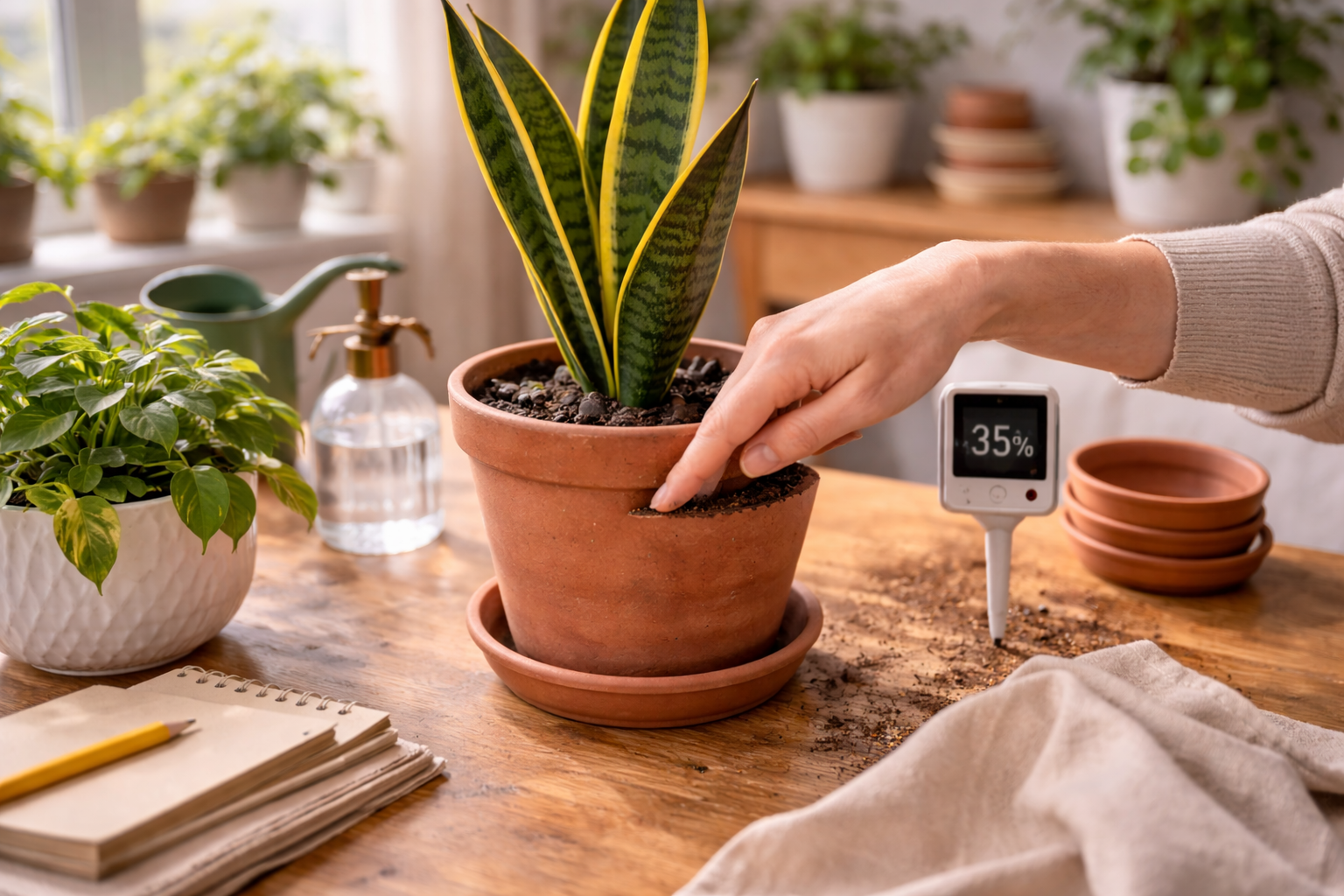
The simplest method is the finger test. Insert your finger about one to two inches into the soil.
If the soil feels moist, wait. If it feels dry at that depth, watering may be needed.
For deeper pots, moisture meters can help, but learning to feel the soil builds confidence over time.
Understand the Plant’s Natural Water Preferences
Different plants evolved in different environments. Some prefer consistently moist soil, while others thrive when soil dries out between waterings.
Succulents, cacti, and snake plants prefer drier conditions. Ferns and peace lilies prefer more consistent moisture.
Knowing your plant’s natural habitat helps you avoid unnecessary watering.
Choose Pots with Proper Drainage Holes
Drainage holes are essential for preventing water buildup. Pots without drainage trap excess water at the bottom.
This creates an environment where roots sit in water for extended periods, increasing the risk of rot.
If decorative pots lack drainage, use them as outer covers with a removable inner pot that drains properly.
Never Ignore Excess Water in Saucers
After watering, excess water often collects in saucers beneath pots. Leaving this water allows roots to absorb more moisture than needed.
Always empty saucers after watering. This simple habit significantly reduces the risk of overwatering.
Standing water is one of the most common hidden causes of root problems.
Use the Right Pot Size for Each Plant
Oversized pots hold more soil, which holds more water. Small plants in large pots often suffer from waterlogged soil.
Choose pots that are only slightly larger than the root ball. This allows roots to dry evenly between waterings.
Correct pot size improves water control and root health.
Select Well-Draining Potting Mix
Not all soil mixes drain equally. Heavy or compacted soil holds water longer than plants can tolerate.
Use a high-quality potting mix designed for indoor plants. For plants that prefer drier conditions, mixes with added perlite or sand work well.
Good soil structure is essential for proper drainage.
Avoid Compacting the Soil
Pressing soil down too firmly reduces air pockets and slows drainage. Compacted soil stays wet longer and restricts root growth.
When repotting, fill pots gently and allow soil to settle naturally after watering.
Loose, airy soil helps roots breathe and dry appropriately.
Water Slowly and Evenly
Pouring water too quickly can flood the soil surface without allowing proper absorption.
Water slowly until water begins to drain from the bottom. This ensures even moisture without oversaturation.
Slow watering improves control and reduces runoff.
Stop Watering at the First Sign of Drainage
Once water flows from the drainage holes, stop watering. Continuing beyond this point only increases excess moisture.
More water does not equal better hydration.
Trust that proper watering has already occurred.
Understand Seasonal Changes in Water Needs
Plants generally require less water in cooler months when growth slows.
During winter or low-light periods, soil dries more slowly. Watering habits should adjust accordingly.
Failing to reduce watering in winter is a major cause of overwatering.
Light Levels Affect Water Consumption
Plants in bright light use water faster than those in low light.
If a plant receives less light than expected, it will likely need less water.
Matching watering habits to light conditions helps prevent soggy soil.
Temperature and Airflow Matter
Warm temperatures and good airflow increase evaporation, while cool, still air keeps soil wet longer.
Plants near air conditioning, heaters, or windows may dry at different rates.
Observe environmental factors during each watering check.
Recognize Early Signs of Overwatering
Early signs include yellowing lower leaves, soft stems, and soil that never seems to dry.
Mold on soil surface or a sour smell can also indicate excess moisture.
Catching these signs early allows for correction before serious damage occurs.
Don’t Confuse Wilting with Thirst
Overwatered plants can wilt just like underwatered ones. This often leads people to add even more water.
Always check soil moisture before responding to wilting.
Wilting with wet soil is a strong warning sign of overwatering.
Improve Drainage for Existing Plants
If a plant shows signs of excess water, improving drainage can help.
Loosen compacted soil, ensure drainage holes are clear, and reduce watering frequency.
In severe cases, repotting into fresh, well-draining soil may be necessary.
Use Pots Made from Breathable Materials
Terracotta and unglazed ceramic pots allow moisture to evaporate through their walls.
These materials reduce the risk of water retention compared to plastic or glazed pots.
Breathable pots are especially helpful for beginners.
Group Plants by Similar Water Needs
Grouping plants with similar watering requirements simplifies care.
This reduces the chance of accidentally overwatering one plant while caring for another.
Organization supports consistency and accuracy.
Avoid Watering When the Plant Is Stressed
Plants under stress from repotting, temperature changes, or low light may need less water.
Give plants time to adjust before resuming regular watering.
Patience prevents compounding stress.
Build a Weekly Observation Routine
Instead of frequent watering, build a routine focused on observation.
Check soil, leaves, and environment once a week. Water only when necessary.
Observation-based care prevents most watering mistakes.
Keep Records if Needed
If you manage many plants, simple notes can help track watering patterns.
This is especially useful for beginners learning different plant needs.
Over time, experience replaces the need for notes.
Common Myths About Watering Potted Plants
Many believe plants need daily watering. In reality, most indoor plants prefer drying out slightly.
Another myth is that more water leads to faster growth. Excess water often slows growth instead.
Understanding these myths prevents common errors.
Teaching Others in the Household
If others share your space, explain your watering approach.
This prevents accidental overwatering by well-meaning helpers.
Clear communication protects plant health.
Long-Term Benefits of Proper Watering
Avoiding excess water strengthens root systems and improves overall resilience.
Plants grow more steadily and resist disease better when watered correctly.
Proper watering supports long-term success.
Creating Healthy Habits for Potted Plants
Avoiding overwatering is not about withholding care, but about providing the right amount at the right time. By understanding soil moisture, choosing proper pots and soil, and observing plants closely, you can prevent one of the most common causes of plant failure.
Healthy watering habits lead to stronger roots, more vibrant growth, and plants that thrive in potted environments. With patience, observation, and consistency, excess water becomes a problem of the past—and your plants will reward you with long-lasting health and beauty.