
Watering is one of the most important aspects of plant care, yet it is also one of the most misunderstood. Many plant problems indoors are not caused by a lack of water, but by watering at the wrong time. Knowing when your plant actually needs water is essential for keeping it healthy, strong, and long-lasting.
Every plant has unique water requirements, but there are universal signs that help you understand what your plant is communicating. Learning to read these signs allows you to avoid common mistakes such as overwatering or underwatering. This article explains how to tell if your plant needs water using observation, simple techniques, and consistent care habits.
Why Watering Plants Correctly Matters
Water plays a crucial role in plant life. It helps transport nutrients, supports cell structure, and allows plants to grow properly. However, too much or too little water disrupts this balance.
Incorrect watering can lead to:
- Root stress
- Slow growth
- Yellowing leaves
- Increased risk of pests
Understanding when to water helps prevent long-term damage.
Why Overwatering Is More Common Than Underwatering
Many people assume plants need frequent watering, especially indoors. In reality, overwatering is one of the most common causes of plant decline.
Overwatering often happens because:
- Soil does not dry properly
- Pots lack drainage
- Watering schedules are too rigid
Learning to water based on plant needs rather than habit is essential.
Understanding Your Plant’s Natural Environment
Plants evolved in different climates and environments. Some are adapted to dry conditions, while others prefer consistently moist soil.
Before watering, consider:
- The plant’s native environment
- Leaf thickness and structure
- Growth rate
These characteristics offer clues about water needs.
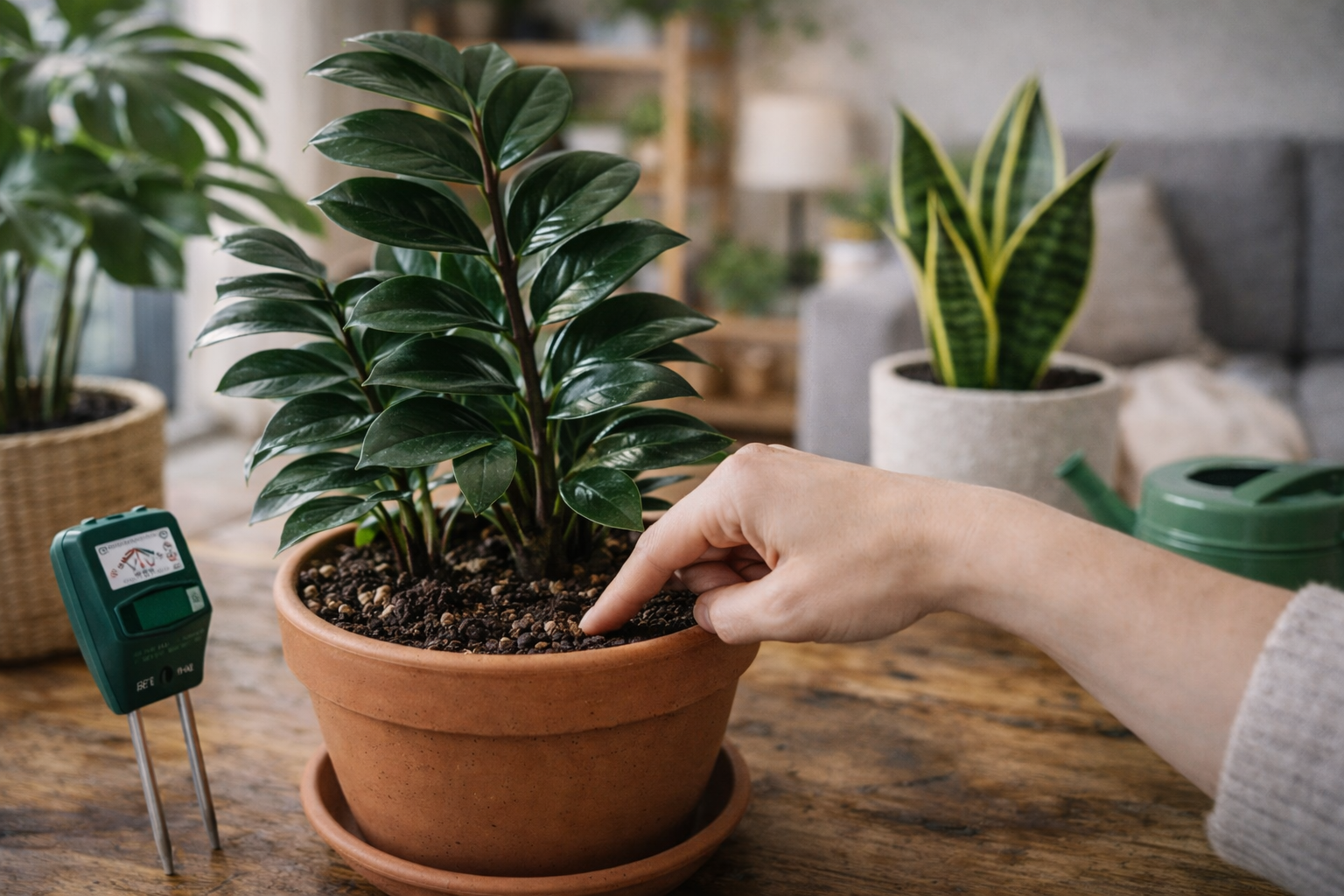
Checking the Soil: The Most Reliable Method
Soil moisture is the most accurate indicator of whether a plant needs water.
To check soil moisture:
- Insert your finger into the soil
- Feel the moisture level below the surface
- Water only if the soil feels dry at the appropriate depth
This simple test prevents unnecessary watering.
How Deep to Check the Soil
Different plants require different levels of soil dryness before watering.
General guideline:
- Shallow-root plants need slightly moist soil
- Deep-root plants tolerate more drying
Understanding root depth helps you decide when to water.
Observing Leaf Appearance
Leaves often show visible signs when a plant needs water.
Common signs include:
- Drooping or wilting leaves
- Loss of firmness
- Slight curling
These signs usually improve after proper watering.
Difference Between Dryness and Overwatering Symptoms
Some symptoms look similar but have different causes.
Underwatered plants:
- Look limp
- Soil feels dry
- Leaves may recover quickly after watering
Overwatered plants:
- Leaves turn yellow
- Soil stays wet
- Recovery is slower
Understanding the difference prevents repeated mistakes.
Feeling the Weight of the Pot
Pot weight is an effective watering indicator.
How to use this method:
- Lift the pot after watering
- Lift it again when dry
- Compare the weight
A lighter pot usually means the plant needs water.
Leaf Texture as a Watering Indicator
Healthy leaves feel firm and smooth.
Signs of water stress:
- Soft or wrinkled leaves
- Dry, crispy edges
- Reduced leaf elasticity
Touching the leaves helps confirm visual cues.
Growth Changes as a Warning Sign
Plants slow down growth when stressed.
Signs related to water:
- Fewer new leaves
- Stalled growth
- Smaller leaves
Water imbalance often appears before visible damage.
Seasonal Changes Affect Water Needs
Plants require different amounts of water throughout the year.
Seasonal considerations:
- Less water in colder months
- More water during active growth
- Adjusting watering frequency accordingly
Seasonal awareness prevents stress.
Indoor Conditions That Affect Watering
Indoor environments influence how fast soil dries.
Important factors include:
- Temperature
- Humidity
- Air circulation
- Light exposure
Rooms with dry air may require more frequent checks.
The Role of Pot Size and Material
Pot size and material affect moisture retention.
Larger pots:
- Hold moisture longer
Smaller pots:
- Dry faster
Porous materials allow faster evaporation.
Drainage Holes and Their Importance
Proper drainage prevents water from accumulating around roots.
Good drainage:
- Allows excess water to escape
- Prevents root suffocation
- Reduces disease risk
Always check drainage before watering.
Using a Consistent Watering Routine
Consistency is more important than frequency.
Good practices include:
- Checking plants regularly
- Watering based on need
- Avoiding fixed schedules
Observation leads to better decisions.
Signs of Chronic Underwatering
Long-term lack of water causes damage.
Signs include:
- Dry, brittle leaves
- Leaf drop
- Weak stems
Chronic stress reduces plant resilience.
Signs of Chronic Overwatering
Long-term excess water damages roots.
Warning signs include:
- Persistent yellow leaves
- Mushy stems
- Foul-smelling soil
These issues require immediate adjustment.
Using Watering Tools Wisely
Tools can support better watering habits.
Helpful tools:
- Moisture meters
- Self-watering pots
- Watering cans with narrow spouts
Tools support, but observation remains essential.
The Importance of Patience After Watering
Plants need time to respond after watering.
Avoid:
- Rewatering immediately
- Moving plants unnecessarily
- Overcorrecting
Patience helps plants recover naturally.
Teaching Yourself to Read Plant Signals
Plants communicate through subtle changes.
Learning this skill:
- Builds confidence
- Reduces mistakes
- Improves plant health
Observation improves with experience.
Common Watering Mistakes to Avoid
Frequent mistakes include:
- Watering on a fixed schedule
- Ignoring soil condition
- Using pots without drainage
Avoiding these mistakes simplifies plant care.
Creating a Healthy Watering Habit
Healthy watering habits are built through awareness.
Key habits include:
- Checking soil before watering
- Observing leaves regularly
- Adjusting to seasons
Small habits lead to long-term success.
Understanding That Each Plant Is Unique
No two plants behave exactly the same.
Watering should be:
- Flexible
- Observational
- Responsive
Adapting to each plant improves results.
Building Confidence as an Indoor Plant Caregiver
Confidence grows as you understand your plants.
With practice:
- Watering becomes intuitive
- Plants thrive more easily
- Stress decreases
Experience leads to better care.
Creating a Balanced Relationship with Watering
Knowing when your plant needs water is a skill that develops over time. By observing soil, leaves, growth patterns, and environmental conditions, you can respond accurately to your plant’s needs.
Instead of following strict schedules, let your plants guide you. With attention and consistency, watering becomes simple, effective, and stress-free, allowing your indoor plants to stay healthy and beautiful for years.