
Creating a lush, green sanctuary is not a luxury reserved for homeowners with sprawling backyards and sunrooms. In fact, some of the most beautiful indoor gardens exist within the temporary walls of rented apartments. However, being a renter comes with a unique set of challenges. You cannot knock down a wall to let in more light, you often cannot drill holes for hanging baskets, and there is always the looming anxiety of the security deposit.
Gardening in a rental requires a shift in mindset. It is about adaptability, protecting the property, and choosing plants that fit a transient lifestyle. Whether you are in a basement studio or a high-rise with strict landlord rules, you can cultivate a thriving urban jungle.
This guide will explore the specific strategies needed to maintain an indoor garden in a rented space without risking your deposit or your back when it’s time to move.
Protecting the Landlord’s Property (and Your Deposit)
The number one rule of renting is: leave the place exactly as you found it. For plant lovers, the biggest enemy is water damage. A single overflowing pot sitting on a hardwood floor or a laminate countertop can cause warping, staining, or rot that will cost you dearly when you move out.
Invest in Deep Saucers
Never place a nursery pot directly on the floor or a piece of furniture. Always use a saucer. However, shallow terracotta saucers are porous and can “sweat” moisture onto the floor. Instead, use glazed ceramic or plastic saucers. If you prefer the look of terracotta, place a cork or rubber mat underneath it to create a barrier against moisture.
Elevate Your Plants
The best way to save the floors is to get the plants off the ground. Use plant stands with legs. This not only aids in air circulation for the plant but also allows you to easily sweep and mop underneath without moving heavy pots. It also allows you to spot leaks immediately before they become permanent stains.
Watch the Walls
Foliage holds moisture. If you have a large Monstera or a bushy Fern pressed tightly against a painted wall, the constant humidity can eventually cause the paint to bubble or peel. Rotate your plants regularly so that the leaves are not constantly touching the drywall, or pull the plant stand a few inches away from the wall.
Vertical Gardening Without Drilling Holes
One of the greatest frustrations for renters is the inability to drill hooks into the ceiling for hanging plants. Trailing plants like Pothos, Philodendrons, and String of Pearls are beautiful, but they need height. Fortunately, there are several “renter-friendly” hacks to achieve this look without power tools.
The Tension Rod Trick
If you have a window that is set slightly deep into the wall, you can install a tension rod (like a shower curtain rod) inside the window frame. It requires no screws and leaves no marks. You can hang multiple lightweight planters from this rod using S-hooks, creating a beautiful “green curtain” directly in the sunlight.
Coat Racks and Ladders
Freestanding furniture is your best friend. A wooden blanket ladder leaning against a wall makes a perfect tiered plant stand for trailing vines. Similarly, a coat rack can be repurposed as a plant hanger. It allows you to hang four or five macramé planters in a corner without touching the ceiling.
Top of Furniture
Utilize the vertical space you already have. The tops of bookshelves, kitchen cabinets, and refrigerators are prime real estate for trailing plants. Just be sure you have a sturdy step stool so you can take them down easily for watering.
Assessing Light in a Fixed Space
Homeowners can install skylights or cut down trees to improve lighting. Renters must work with what they have. Understanding your apartment’s orientation is crucial before you buy a single plant.
Check Your Compass
- North-Facing Windows: These provide low to medium indirect light. They never get harsh sun. This is perfect for Ferns, Snake Plants, and ZZ Plants.
- South-Facing Windows: The gold standard. These get bright, direct sunlight for most of the day. Cacti, Succulents, and Birds of Paradise thrive here.
- East-Facing Windows: These get gentle morning sun. Most tropical foliage plants (Monsteras, Calatheas) love this exposure.
- West-Facing Windows: These get intense, hot afternoon sun. This can scorch delicate leaves, so place sheer curtains up or move plants a few feet back.
The Magic of Clamp Lights
If you live in a basement or a unit with few windows, you are not doomed to plastic plants. Artificial grow lights have come a long way. As a renter, look for “clamp lights.” These are inexpensive fixtures that clip onto shelves, desks, or headboards. Screw in a full-spectrum LED grow bulb (which looks like regular white light, not purple), and you can grow a sun-loving cactus in a windowless hallway.
The “Move-Ready” Strategy: Potting for Portability
Renters move. It is a fact of life. Whether you stay for one year or five, eventually you will have to transport your jungle to a new location. If you plant a giant Palm directly into a heavy ceramic pot, moving day will be a nightmare.
The Nursery Pot Method
Keep your plants in the plastic nursery pots they came in (or upgrade to slightly larger plastic pots). Then, place that plastic pot inside a decorative ceramic pot (this is called using a “cachepot”).
When it is time to move, you simply lift the lightweight plastic pot out of the heavy ceramic container. You can stack the ceramic pots efficiently in a box, and pack the plants separately. This reduces the weight significantly and prevents your expensive ceramic pots from cracking during transit.
Avoid Oversizing
While we all love the look of a ceiling-high Fiddle Leaf Fig, consider the logistics of moving it down three flights of stairs. In a rental, it is often smarter to keep plants at a manageable size. You can control size by pruning roots and foliage, keeping the plant healthy but compact.
Dealing with Humidity and Airflow
Apartments, especially in modern buildings, often have dry air due to aggressive heating or air conditioning systems. Furthermore, you might not have control over the thermostat if it is a central system.
Humidifiers vs. Misting
Misting plants with a spray bottle is largely a myth; the water evaporates too quickly to raise humidity. Instead, invest in a small, portable humidifier. It plugs into the wall and saves your tropical plants from crispy edges without damaging the apartment.
Draft Awareness
In small apartments, space is tight. You might be tempted to put a plant right next to the radiator or the AC vent. Do not do it. Extreme temperature fluctuations will kill a plant faster than skipping a watering. Keep plants at least three feet away from any active heating or cooling vents.
Pest Control in Shared Buildings
Living in an apartment means sharing walls—and sometimes pests—with neighbors. You might be the cleanest gardener in the world, but if your neighbor has fungus gnats, they can easily travel through vents or hallways to your unit.
Quarantine New Plants
When you bring a new plant home, do not put it with your other plants immediately. Keep it in a separate room (like the bathroom) for two weeks. Inspect it for spider mites, mealybugs, or scale. This prevents a full-blown infestation that could take over your small space.
** preventative Maintenance**
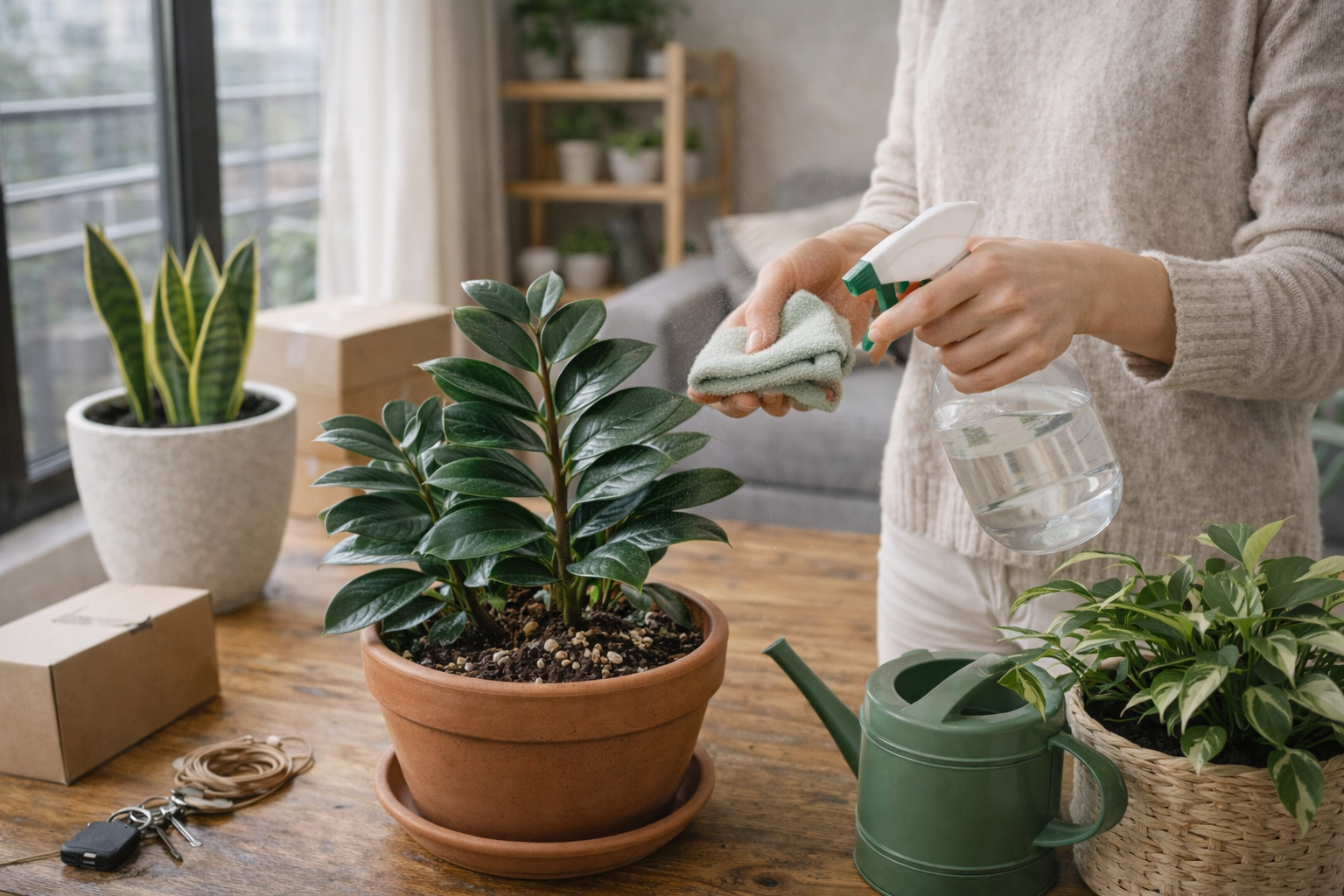
Since you are indoors, you want to avoid harsh chemical sprays. Wipe down the leaves of your broad-leaf plants (like Rubber Trees) with a damp cloth every few weeks. This removes dust (helping photosynthesis) and physically removes pests before they multiply. Neem oil is a great natural solution, but be warned: it has a strong smell that can linger in a small studio apartment.
Best Low-Maintenance Plants for Renters
If you have a busy lifestyle, travel often, or anticipate moving soon, choose plants that are resilient and adaptable.
- Snake Plant (Sansevieria): The ultimate renter plant. It tolerates low light, infrequent watering, and tight root spaces. It is almost indestructible.
- ZZ Plant (Zamioculcas zamiifolia): Thrives in office lighting and needs water only once a month. It has glossy, beautiful leaves that look high-maintenance but aren’t.
- Pothos (Epipremnum aureum): The classic trailing vine. It grows fast, tells you when it’s thirsty (the leaves droop), and recovers quickly. It is perfect for those tension rods or high shelves.
- Chinese Evergreen (Aglaonema): Comes in beautiful patterns of pink, silver, and red. It does well in lower light and adds a pop of color without needing a flower window.
- Cast Iron Plant (Aspidistra elatior): As the name suggests, it is tough. It is unaffected by temperature fluctuations, making it great for drafty apartment entryways.
How to Pack Plants When Moving Out
When the lease is up, moving your plants requires a strategy.
- Water Early: Water your plants 2-3 days before the move. You want the soil to be moist enough that the plant isn’t stressed, but dry enough that it isn’t heavy or leaking water in the moving truck.
- Box Them Up: Use open-top boxes. Pack the spaces between pots with newspaper or towels so they don’t slide around.
- Climate Control: Do not put plants in a moving truck if it is freezing cold or blistering hot outside. If possible, transport them in your personal car where you can control the AC or heat.
- Unpack First: When you arrive at the new apartment, unpack the plants first. Get them out of the boxes and into the light. They will be shocked by the move, so give them a few days to adjust before watering or feeding them.
Conclusion
Living in a rented apartment does not mean you have to sacrifice your connection to nature. By using smart, non-invasive design tricks and choosing the right plants for your specific lighting conditions, you can build a stunning indoor garden.
The key is flexibility. Use lightweight pots, utilize vertical space with furniture rather than drills, and always prioritize protecting the apartment’s structure.
Your rental is your home, even if it is temporary. Filling it with life, oxygen, and greenery is one of the best ways to make a strange space feel personal and grounded. So go ahead—buy that Monstera, set up that tension rod, and turn your apartment into the oasis you deserve. Just don’t forget the saucers under the pots