
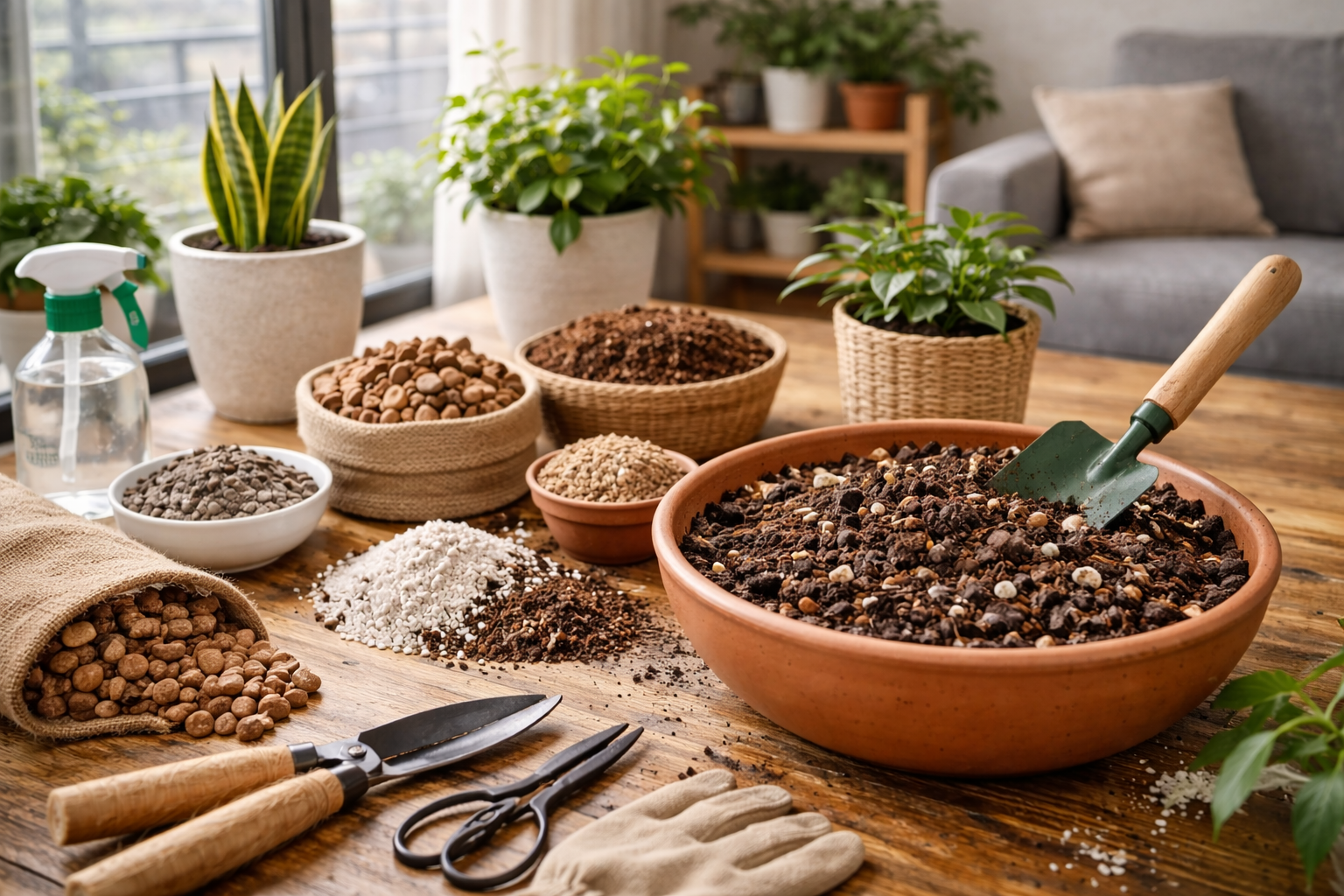
Choosing the right potting mix is one of the most important decisions for anyone who grows plants in apartments. While many people focus on watering and lighting, the substrate inside the pot plays a critical role in plant health, root development, and long-term success.
Indoor plants rely entirely on the soil in their pots for support, nutrients, and moisture balance. Using the wrong substrate can lead to problems such as root rot, slow growth, pests, and constant maintenance issues. Understanding what makes an ideal potting mix helps you create a stable environment where plants can thrive indoors.
This article explains what an ideal substrate is, why it matters, and how to choose or prepare the best potting mix for plants grown in pots inside apartments.
What Is a Potting Mix and Why It Matters
A potting mix, also known as substrate, is the material used to fill pots and containers where plants grow. Unlike garden soil, potting mixes are designed to work in confined spaces with limited airflow and drainage.
An ideal potting mix provides:
- Structural support for roots
- Proper drainage
- Adequate moisture retention
- Oxygen for root respiration
- Nutrients for growth
Indoors, where pots restrict root expansion, the quality of the substrate becomes even more important.
Why Garden Soil Is Not Suitable for Indoor Pots
One common mistake is using soil taken directly from gardens or outdoor areas. While it may seem natural, garden soil is not appropriate for indoor potted plants.
Garden soil problems include:
- Poor drainage in containers
- Compaction over time
- Presence of pests and pathogens
- Inconsistent nutrient content
Indoor plants need a lighter, cleaner, and more controlled growing medium.
The Role of Drainage in Indoor Potting Mixes
Drainage is essential for plants grown in apartments. Without proper drainage, excess water remains trapped in the pot, causing roots to suffocate.
An ideal potting mix:
- Allows excess water to flow out easily
- Prevents water from pooling around roots
- Reduces the risk of root rot
Good drainage is especially important in apartments, where evaporation is slower.
Moisture Retention Without Waterlogging
While drainage is important, indoor plants still need consistent moisture. The best substrates strike a balance between holding water and releasing excess moisture.
A good potting mix:
- Retains enough water between watering sessions
- Releases excess water quickly
- Prevents soil from becoming soggy
This balance helps plants remain hydrated without stress.
Airflow and Oxygen for Healthy Roots
Roots need oxygen to grow and absorb nutrients. Compacted soil blocks airflow and leads to weak root systems.
An ideal indoor substrate:
- Feels light and airy
- Does not harden after drying
- Allows oxygen to reach the roots
Proper airflow keeps roots healthy and active.
Common Components of High-Quality Potting Mixes
Most indoor potting mixes contain a combination of materials that work together to support plant health.
Common components include:
- Organic materials for moisture retention
- Inert materials for drainage
- Mineral elements for structure
Each component serves a specific purpose in the mix.
Organic Matter and Its Benefits
Organic materials help retain moisture and provide nutrients.
Benefits include:
- Improved water retention
- Gradual nutrient release
- Support for beneficial microorganisms
However, too much organic matter can reduce drainage if not balanced correctly.
Drainage-Enhancing Materials
Materials added to improve drainage prevent water from staying trapped in the pot.
These materials:
- Create air pockets
- Improve water flow
- Reduce soil compaction
They are essential for apartment plant care.
Why Balance Matters More Than Ingredients
It’s not just about what’s in the potting mix, but how the components work together.
A balanced mix:
- Drains well
- Retains moisture
- Stays loose over time
Even high-quality ingredients can cause problems if mixed incorrectly.
Choosing Substrate Based on Plant Type
Different plants have different root structures and moisture needs.
Plants that prefer drier conditions need:
- Faster-draining mixes
- Less organic matter
Plants that prefer consistent moisture need:
- Slightly higher moisture retention
- Well-balanced drainage
Matching the substrate to the plant improves long-term health.
Pot Size and Substrate Performance
Pot size affects how the substrate behaves.
Larger pots:
- Retain moisture longer
- Dry out more slowly
Smaller pots:
- Dry out faster
- Require closer monitoring
Choosing the right pot size helps the substrate perform as intended.
Importance of Fresh, Clean Substrate
Reusing old soil indoors increases the risk of pests and disease.
Fresh substrate:
- Reduces contamination risk
- Provides better structure
- Ensures balanced nutrients
Using clean potting mix supports healthier growth.
How Often Should Substrate Be Replaced
Over time, potting mix breaks down and becomes compacted.
Signs it needs replacement include:
- Poor drainage
- Constant moisture retention
- Unpleasant odor
Replacing substrate helps restore airflow and drainage.
Avoiding Substrate-Related Pest Problems
Poor soil conditions often attract pests.
To prevent issues:
- Avoid overly wet substrate
- Remove decaying plant material
- Use clean pots and fresh soil
Healthy substrate discourages pest infestations.
Understanding Nutrient Content in Potting Mixes
Most potting mixes contain basic nutrients, but these do not last forever.
Key points:
- Nutrients deplete over time
- Indoor plants need gradual feeding
- Over-fertilization harms roots
Balanced nutrition works best indoors.
Mixing Your Own Potting Mix at Home
Some people prefer mixing their own substrate to control quality.
Benefits include:
- Customization
- Better drainage control
- Cost efficiency
Homemade mixes require careful balance to work well indoors.
Pre-Made Potting Mixes for Apartment Living
High-quality pre-made potting mixes are convenient and effective.
They are:
- Sterilized
- Balanced for container use
- Easy for beginners
Choosing a reputable brand reduces guesswork.
Testing Drainage Before Planting
Before planting, test the substrate.
Simple test:
- Water the pot thoroughly
- Observe drainage speed
- Soil should drain without pooling
This ensures the mix works properly.
The Impact of Substrate on Watering Frequency
Good substrate simplifies watering routines.
Balanced soil:
- Dries evenly
- Prevents sudden moisture extremes
- Makes watering more predictable
This reduces mistakes.
Supporting Root Development Indoors
Healthy roots lead to healthy plants.
The right substrate:
- Encourages root expansion
- Prevents root suffocation
- Supports nutrient absorption
Root health is the foundation of plant success.
Creating Long-Term Stability for Indoor Plants
Indoor plants thrive when their environment is stable.
A quality substrate:
- Maintains structure over time
- Supports consistent growth
- Reduces stress
This stability is especially important in apartments.
Common Substrate Mistakes to Avoid
Common mistakes include:
- Using heavy garden soil
- Ignoring drainage needs
- Reusing old substrate
- Overwatering compacted soil
Avoiding these mistakes prevents many plant problems.
Building Confidence Through Better Soil Choices
Choosing the right substrate gives you control over plant health.
With proper soil:
- Plants grow more predictably
- Problems decrease
- Maintenance becomes easier
Confidence grows as plants thrive.
Creating a Healthy Foundation for Apartment Plants
The substrate is the foundation of every potted plant. Indoors, where plants rely completely on containers, choosing the ideal potting mix is essential.
By understanding drainage, moisture balance, airflow, and plant needs, you can create an environment where indoor plants grow strong, resilient, and healthy. With the right substrate, caring for plants in apartments becomes simpler, more enjoyable, and far more successful.