
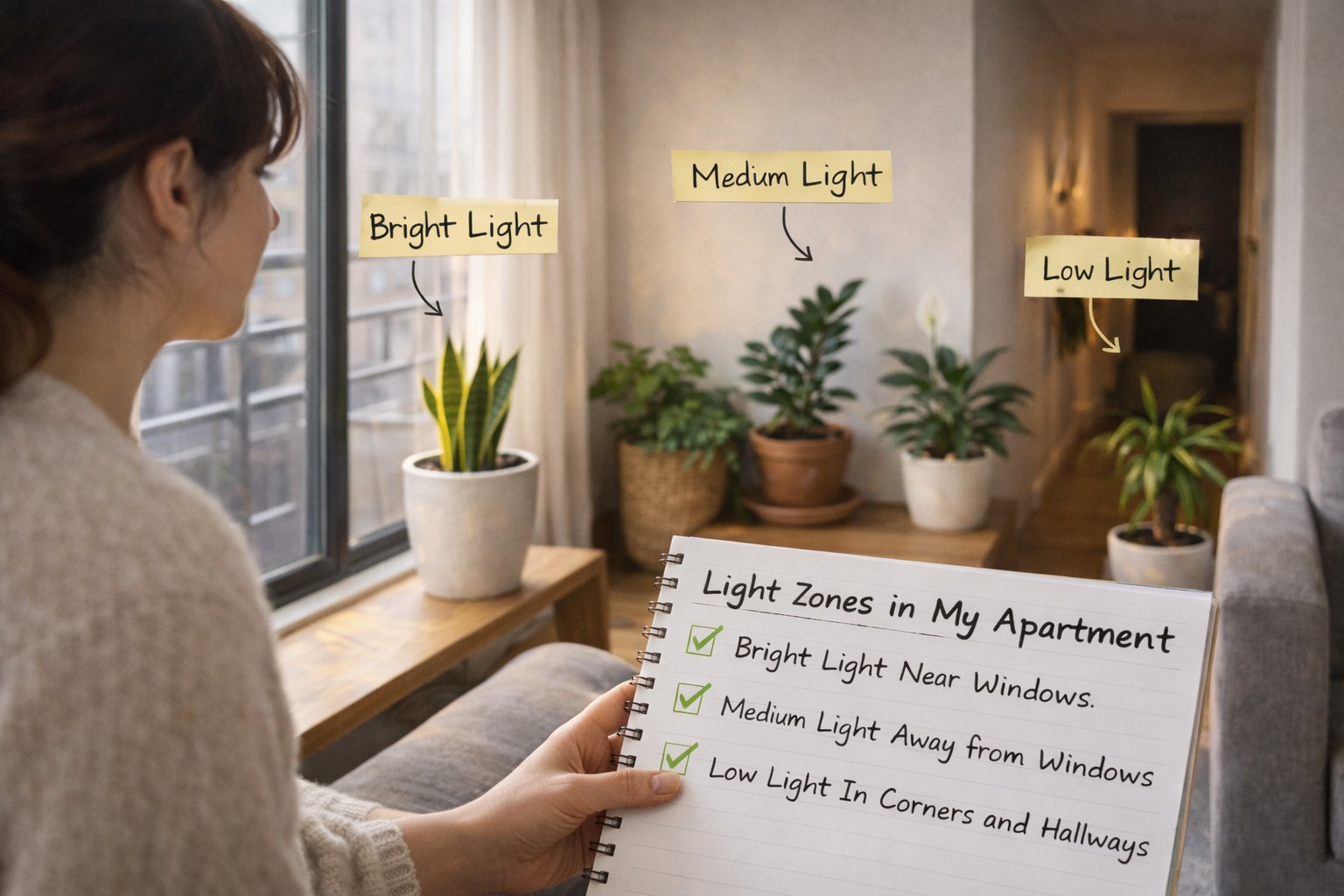
Light is one of the most decisive factors in the health of indoor plants. In apartments, where sunlight is limited and filtered by windows, walls, and nearby buildings, understanding how light works is essential. Many plant problems — weak growth, yellow leaves, or slow development — are directly related to incorrect light placement rather than watering or soil issues.
Knowing where to place each plant inside your apartment allows plants to grow naturally, maintain their shape, and remain healthy over time. This article explains how indoor lighting works, how to identify light levels in your apartment, and how to position plants correctly for long-term success.
Why Light Is So Important for Indoor Plants
Plants depend on light to produce energy through photosynthesis. Without enough light, plants cannot maintain healthy growth, even if all other care is correct.
Indoors, light is:
- Less intense than outdoors
- Filtered by glass and curtains
- Directional and uneven
Because of this, plant placement becomes more important than plant variety.
Understanding Natural Light Inside an Apartment
Natural light indoors behaves differently depending on the apartment’s orientation, window size, and surrounding structures.
Light indoors usually falls into three categories:
- Bright indirect light
- Medium indirect light
- Low light
Very few indoor spaces provide true direct sunlight for extended periods.
Bright Indirect Light Explained
Bright indirect light is strong light that does not hit the plant directly. It usually comes from large windows where sunlight is filtered or reflected.
This type of light is commonly found:
- Near windows with sheer curtains
- A short distance away from sunny windows
- In well-lit living rooms
Many popular houseplants thrive in bright indirect light.
Medium Indirect Light and Its Characteristics
Medium light occurs in spaces that receive daylight but not consistently throughout the day.
Typical locations include:
- Rooms with smaller windows
- Areas a few meters from windows
- Rooms that receive light only part of the day
Plants in these areas grow more slowly but can remain healthy if properly chosen.
What Low Light Really Means
Low light does not mean no light. It refers to areas that receive very limited natural daylight.
Low-light areas are usually:
- Hallways
- Bathrooms with small windows
- Corners far from windows
Plants that tolerate low light grow slowly and need careful watering to avoid problems.
How Window Direction Affects Plant Placement
The direction your windows face influences the intensity and duration of light.
General guidelines:
- East-facing windows provide gentle morning light
- West-facing windows offer stronger afternoon light
- North-facing windows usually have softer, consistent light
- South-facing windows tend to be the brightest
Understanding window direction helps you choose suitable spots.
Placing Plants Near Windows Without Causing Damage
Placing plants close to windows can be beneficial, but it requires attention.
To avoid problems:
- Keep plants a short distance from direct sun
- Use curtains to diffuse harsh light
- Rotate plants regularly
Too much direct sunlight can burn leaves, even indoors.
Where to Place Plants That Prefer Bright Light
Plants that enjoy brighter environments should be placed:
- Near large windows
- In living rooms or dining areas
- In spaces with open layouts
These plants usually show stronger growth and fuller leaves when light is adequate.
Best Spots for Medium-Light Plants
Medium-light plants are very versatile and adapt well to apartment life.
Ideal locations include:
- Bedrooms with windows
- Home offices
- Areas slightly away from windows
These plants benefit from consistent but gentle light exposure.
Choosing Locations for Low-Light Plants
Low-light plants should not be placed in complete darkness.
Good locations include:
- Entryways with indirect daylight
- Bathrooms with small windows
- Shelves or corners that receive ambient light
These plants grow slowly and require minimal maintenance.
Using Artificial Light to Support Plant Growth
In some apartments, natural light is limited. Artificial lighting can help support plant health when used correctly.
Artificial light works best when:
- Positioned close to the plant
- Used consistently
- Combined with natural light when possible
It should supplement, not replace, daylight whenever possible.
How Distance from Light Affects Plant Health
Light intensity decreases quickly with distance. Even moving a plant a short distance away from a window can significantly reduce light exposure.
As distance increases:
- Growth slows
- Leaves may become smaller
- Stems may stretch
Placing plants too far from light is a common mistake.
Recognizing Signs of Insufficient Light
Plants show clear signs when they are not receiving enough light.
Common signs include:
- Long, stretched stems
- Pale or yellow leaves
- Slow or uneven growth
Adjusting placement early prevents long-term damage.
Recognizing Signs of Excess Light
Too much light can also harm indoor plants.
Warning signs include:
- Burned leaf edges
- Brown or white spots
- Dry, brittle leaves
If these appear, move the plant slightly away from the light source.
Rotating Plants for Balanced Growth
Plants naturally grow toward light. Without rotation, they may lean or grow unevenly.
Rotating plants:
- Promotes balanced growth
- Prevents leaning
- Improves overall appearance
Turning pots every few weeks is usually enough.
Seasonal Changes in Indoor Light
Light intensity changes with the seasons, even indoors.
During winter:
- Days are shorter
- Light is weaker
During summer:
- Light is stronger
- Sunlight lasts longer
Adjust plant placement slightly as seasons change.
Using Furniture and Decor to Manage Light
Furniture placement can influence how light moves through a room.
Helpful strategies include:
- Using shelves to elevate plants
- Avoiding blocking windows
- Reflecting light with light-colored walls
Small adjustments can significantly improve light distribution.
Creating Light Zones Inside Your Apartment
Think of your apartment as a series of light zones.
Identify:
- Bright zones near windows
- Medium zones within the room
- Low-light zones farther away
Matching plants to these zones simplifies care.
Avoiding Frequent Relocation
Constantly moving plants disrupts their ability to adapt.
Best practice:
- Choose the right spot early
- Allow plants time to adjust
- Move only when necessary
Stability supports healthy growth.
Building Confidence Through Observation
Light management improves with observation and experience.
As you learn:
- You’ll notice growth patterns
- Placement becomes intuitive
- Plant health improves
Observation is your best guide.
Long-Term Benefits of Correct Plant Placement
When plants receive the right amount of light:
- Growth becomes steady
- Watering needs stabilize
- Maintenance becomes easier
Correct placement reduces stress for both plants and plant owners.
Creating a Well-Lit, Plant-Friendly Apartment
Understanding light allows you to transform your apartment into a plant-friendly environment. With thoughtful placement and small adjustments, even apartments with limited sunlight can support healthy indoor plants.
When light is used wisely, plants thrive naturally, bringing balance, comfort, and life into every room.
✅ Próximo passo
Agora vou criar a imagem horizontal ultra realista para este artigo e, em seguida, continuo automaticamente para o próximo artigo da lista, mantendo exatamente este padrão de qualidade 🌿